
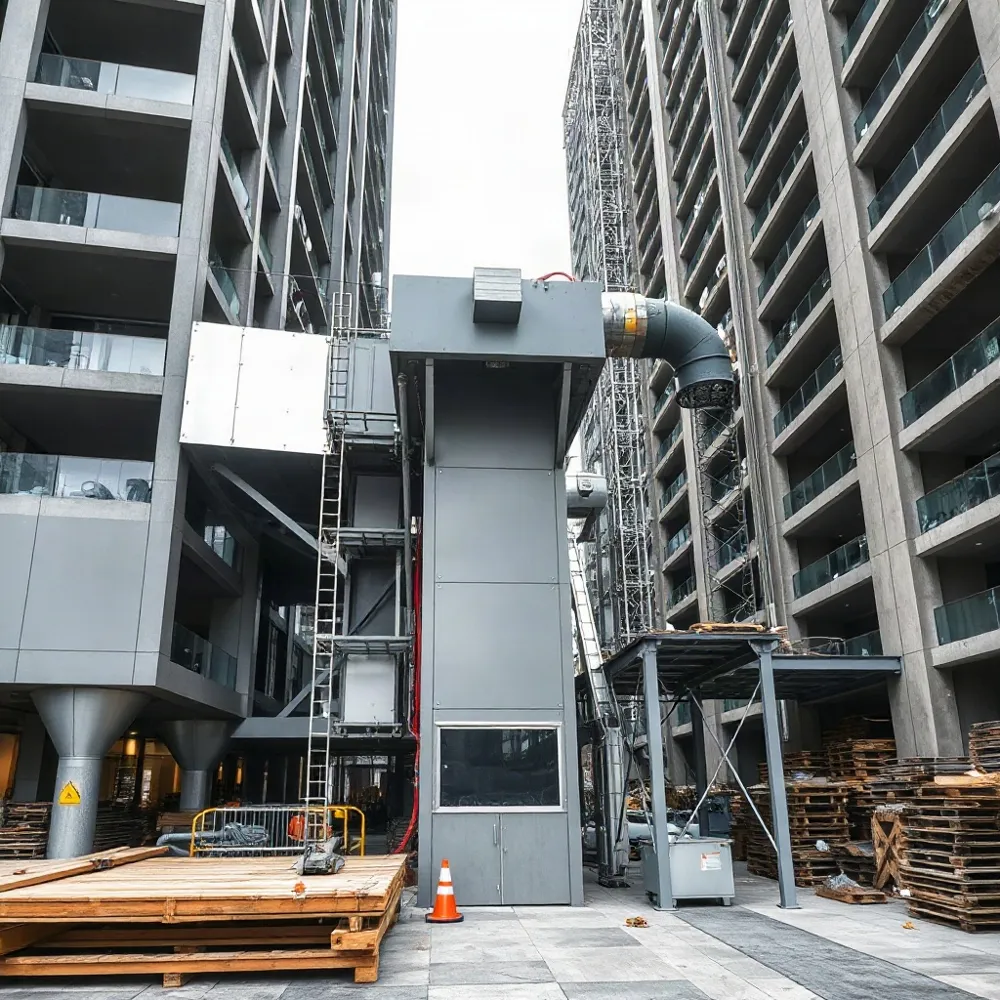
The Waste Challenge in Large‑Scale Construction
The construction industry generates between 20% and 30% of all solid waste worldwide, with concrete and masonry accounting for 70–80% of that material. In the UAE, construction and demolition (C&D) waste makes up approximately 50% of total waste, and over 66% of it still ends up in landfills. These figures underline the urgent need for sustainable waste management approaches in the region’s large-scale building projects.
The scale of the problem is compounded by rapid urban growth. Dubai alone produces nearly 5,000 tonnes of C&D waste every day. Abu Dhabi’s Department of Municipalities and Transport approved almost 75 million square meters of development in 2025 alone, setting up elevated waste flows for the years ahead. Without structured intervention, the environmental and financial costs will continue to rise.
Sustainable waste management is not just an environmental issue — it is a financial and regulatory one. Dubai’s Law No. 18 of 2024 sets a 2027 deadline for phasing out landfills and requires all C&D waste loads to be routed to licensed recycling plants or material recovery facilities. Non-compliance carries escalating penalties, and contamination levels as low as 5% can trigger skip rejection, costing contractors thousands of dirhams in transport and rework. Proper planning from project inception is the only reliable way to stay ahead of these requirements.
Sea Star Engineering addresses this challenge by designing and installing permanent waste chute systems that isolate waste pathways and prevent cross-contamination in high-rise buildings. These systems give facility managers a clean, code-compliant way to handle waste streams from the point of disposal through to central collection, reducing the risk of mixed loads that lead to facility rejections.
The following sections explore the full waste hierarchy — from prevention and source segregation to digital tools, modular construction, on-site recycling, and the evolving regulatory landscape in the UAE. Each part focuses on practical techniques and real-world case studies that engineers, facility managers, and property owners can apply directly to their projects.
Waste Hierarchy: Prevention First

Source reduction — preventing waste at the point of generation — is the most effective strategy in the waste hierarchy. Research shows it can reduce construction and demolition (C&D) waste by 70–90%, cut project costs by 10–20%, and lower CO₂ emissions by 30–50% compared to relying on recycling or disposal (see Frontiers study). These numbers make a strong case for addressing waste at the design stage rather than managing it after generation.
Practical techniques for source reduction include specifying standard material dimensions to minimize off-cuts, adopting modular building systems, using prefabricated components, and applying lean design principles. These methods reduce procurement needs and avoid landfill fees, saving an estimated 30–50% by preventing waste from forming.
Compared to source reduction, recycling typically diverts 50–70% of waste and cuts costs by 20–40%, while reusing materials can achieve 75–90% waste minimization and save 40–70%. However, both face design and logistics constraints that prevention avoids entirely. On large-scale building sites across the UAE, where C&D waste accounts for roughly 50% of total waste, embedding prevention into project planning — supported by the waste chute systems and access solutions from seastareng.com — delivers the highest environmental and economic returns.
UAE Regulations Driving Change
The UAE has established a comprehensive regulatory framework to control the 50% share of total solid waste attributed to construction and demolition (C&D) activities. At the federal level, Federal Law No. 12 of 2018 on integrated waste management mandates sound waste handling and bans open dumping, enforced by Cabinet Resolution No. 39 which standardizes disposal mechanisms across emirates.
Local green building codes create performance-based diversion targets. Abu Dhabi’s Pearl Rating System (Estidama) requires a minimum 30% diversion for project approval, with higher tiers demanding 50–70%. Dubai’s Al Sa’fat regulation mandates at least 50% waste diversion from landfills, while Ras Al Khaimah’s system enforces similar thresholds. These regulations directly influence design and procurement decisions from project inception.
Dubai Law No. 18 of 2024 sets an aggressive 2027 deadline for phasing out landfills, requiring all C&D waste loads to be routed to licensed recycling plants or material recovery facilities. Enforcement is technology-driven: municipal authorities use AI cameras at facility entry gates and GPS-tracked bins to verify Waste Transfer Notes. Contamination levels as low as 5-10% can trigger skip rejection, costing contractors thousands of dirhams in transport, downtime, and rework.
By 2022, the UAE achieved a C&D waste recycling rate of 91% through legislative pressure and specialized facilities like Tadweer in Abu Dhabi and Bee’ah in Sharjah. These facilities convert material into recycled aggregate, sand for landfill cover, and eco-friendly construction products. The regulatory push creates a concrete compliance environment that project teams must address through proper on-site segregation, digital tracking, and documented diversion reporting.
Source Segregation: The Critical Control Point
On large building sites, source segregation — separating concrete, metals, wood, plastics, and general waste at the point of generation — is the single most effective control for improving recycling rates and avoiding costly penalties. Contamination levels as low as 5–10% can trigger skip rejection at a material recovery facility, costing a contractor several thousand dirhams in transport, downtime, and rework.
The challenge is acute on congested urban sites in the UAE, where time pressure, summer heat, and limited space for sorting bins lead to mixed loads. In Dubai, municipal enforcement now uses AI cameras at facility entry gates and GPS-tracked bins for Waste Transfer Note verification, raising the cost of non-compliance.
A proven best practice is the colour-coded bin system. The case study of a 100,000 sq ft high-rise building project in the UK achieved a 98.3% landfill diversion rate through enhanced segregation using distinct skips for metals, wood, plastics, and inert waste, combined with strict subcontractor monitoring.
Sea Star Engineering supports this approach by designing waste chute systems that integrate with on-site sorting stations, helping project teams direct separated streams directly into dedicated collection containers. Clear labelling and brief toolbox talks at each floor ensure workers understand which material goes where, keeping contamination below the rejection threshold and supporting compliance with Dubai’s requirement to route C&D loads to licensed recycling plants.
Digital Tools: BIM, IoT & AI

Digital technologies are transforming how large-scale sites forecast, monitor, and divert waste. Building Information Modeling (BIM) allows teams to run precise material take-offs from the design model, reducing over-ordering and the off-cuts that typically generate 70–80% of concrete and masonry waste.
IoT-enabled sensors installed in waste bins send real-time fill-level data to a central dashboard. When a bin reaches a configurable threshold — say 80% — the system triggers a collection alert, cutting unnecessary haulage trips and preventing overflow that can cause contamination penalties. Sea Star Engineering integrates these smart monitoring interfaces with its proprietary waste-chute control panels, giving facility managers a single view of fill status across every floor.
Artificial intelligence adds a predictive layer. AI-powered analytics can forecast daily waste generation by floor activity and weather, while robotic sorting lines at material recovery facilities use computer vision to separate recyclables with contamination rates below 5%. Dubai Municipality’s Rasid platform ties these tools together: it GPS-tracks every waste vehicle, cross-checks weighbridge tickets, and flags non-compliant loads in real time, making digital waste tracking a mandatory compliance tool rather than an optional extra.
Modular Construction & Prefabrication
Modular construction and prefabrication shift the majority of building work from congested job sites to controlled factory environments, a change that directly reduces on-site debris by an estimated 30% or more. Off-site fabrication allows precise cutting and assembly under factory conditions, which minimizes offcuts and protects materials from weather-related damage and contamination that commonly occur on open-air sites.
For large-scale projects, the waste-reduction benefit goes beyond volume. Factories can standardize component dimensions to match material stock sizes, nearly eliminating the odd-length offcuts that pile up in site skips. The same logic applies to modular building systems, which reduce waste by using standard sizes and components to minimize offcuts. Sea Star Engineering’s prefabricated access and waste chute solutions follow this principle, delivering factory-precise assemblies that install faster and generate far less site waste than traditional on-site fabrication.
Design for Disassembly and Material Passports
A second advantage of modular methods is the ability to design for disassembly. When building components are bolted rather than bonded, they can be taken apart at end-of-life and redirected into new projects instead of landfills. Material passports — digital inventories that document the composition, condition, and location of every component — make this circular flow practical at scale.
Integrating these approaches aligns with the circular economy in the built environment, where keeping products in use for as long as possible and regenerating natural systems are the guiding principles. For building owners and contractors in the UAE, where Dubai’s Law No. 18 of 2024%20of%202024%20Regulating%20Waste%20Management.html) phases out landfills by 2027, modular and prefabricated strategies offer a compliance-ready path that reduces end-of-life liability while capturing the cost savings of reduced material procurement and waste disposal.
On-site Recycling & Recovery
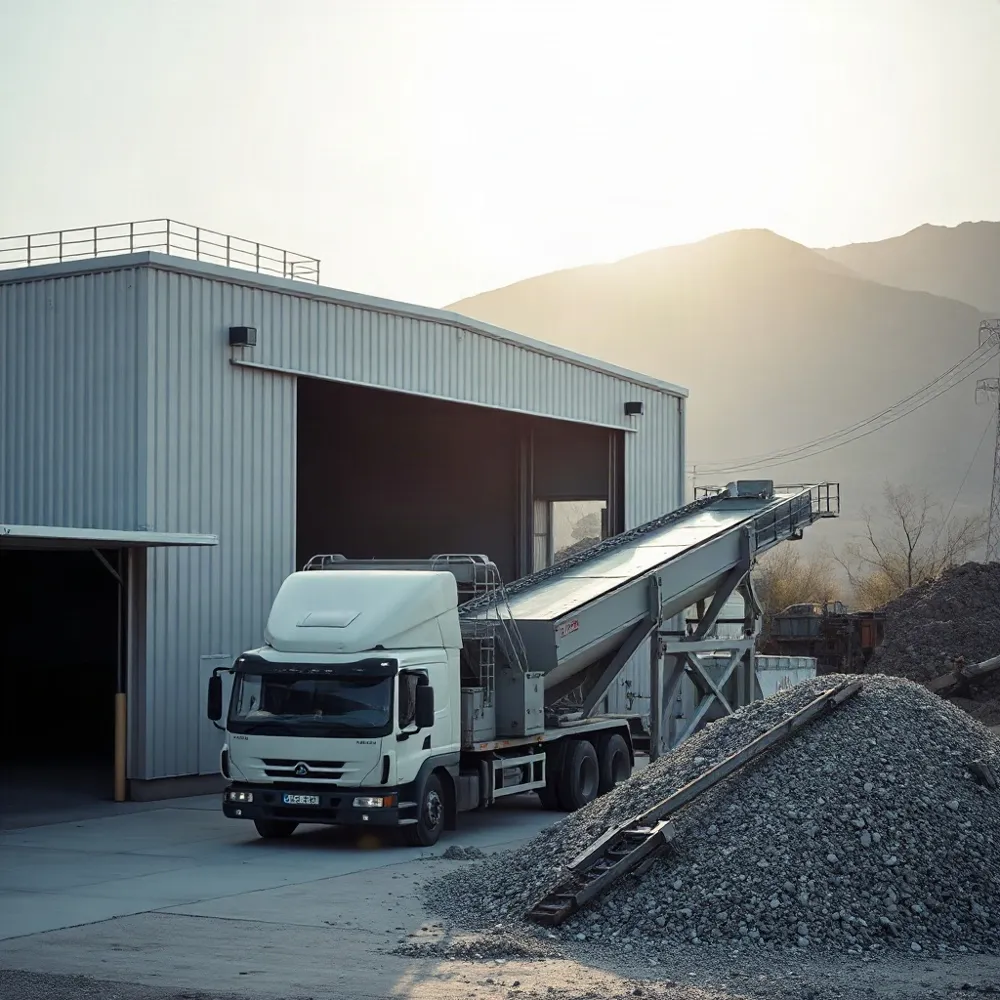
On-site recycling and recovery involve processing construction waste directly at the jobsite to produce reusable materials. Mobile crushing units process inert waste such as concrete directly on the jobsite, producing graded aggregate that replaces virgin material for backfill, sub-base, and temporary roads. This eliminates hauling fees and landfill charges while cutting transport emissions.
A UK high-rise case study demonstrates the potential: over 1,300 tonnes of waste was generated, with 45% recycled, 53% recovered (much of it crushed for aggregate), and only 2% sent to landfill, achieving a 98.3% diversion rate through enhanced segregation and on-site processing.
Material Streams and UAE Facilities
Beyond concrete, on-site operations can recover metals for smelting, wood for engineered boards or biomass fuel, and gypsum for new drywall manufacturing. In the UAE, large-scale facilities support these efforts. Abu Dhabi’s Tadweer plant processes roughly 8,000 tonnes of C&D waste per day and has produced more than 13 million tonnes of recycled aggregate since operations began. Sharjah’s Bee’ah complex, handling over 500,000 tonnes annually, achieves a citywide diversion rate above 90%.
Sea Star Engineering’s integrated approach includes designing waste chute systems that deliver separated material streams directly to ground-level collection points, simplifying the logistics of on-site recovery. For projects where mobile crushing is preferred, positioning a crusher near the chute discharge area reduces material handling steps and maximizes the return from on-site recycling.
Waste Chute Systems for High-Rises
Waste chute systems provide a vertical pathway, typically fabricated from stainless steel or galvanized metal, that carries refuse from upper floors directly to a central collection point at ground or basement level. Each floor is fitted with an intake hopper door, and modern systems use a one-door-open interlock to prevent simultaneous access and reduce the risk of injury. This eliminates the need for staff to manually carry waste through service elevators or stairwells, a process that can account for a significant portion of on-site labor in high-rise projects.
Integration with permanent building access equipment such as Building Maintenance Units (BMUs) further streamlines operations. Chutes can direct waste to compactors or automated collection points positioned at accessible locations per floor, aligning with the BMU track layout. This coordinated approach reduces manual handling, cuts hauling costs, and improves site cleanliness.
Automated Controls and Safety Systems
Advanced waste chutes include automated sensors that monitor fill levels in collection bins, triggering alerts when waste needs to be emptied. Control systems optimize collection schedules and reduce overflow risks. Fire-rated doors and automatic fire suppression mechanisms are integrated directly into the chute to contain any fire within the vertical shaft. Ventilation systems and automated cleaning and disinfection controls prevent odor accumulation and maintain hygiene.
Waste chute systems can integrate with the same permanent access infrastructure used for BMUs and roof cradles, offering property owners a unified approach to building services. This reduces coordination costs and ensures that waste handling and façade maintenance share a common engineering standard.
| Feature | Function | Benefit |
|---|---|---|
| One-door-open interlock | Prevents simultaneous floor access | Eliminates safety incidents from dropped debris |
| Automated fill-level sensors | Monitors bin capacity in real time | Optimizes collection schedules, reduces overflow |
| Fire-rated doors and suppression | Contains flames within chute shaft | Meets fire safety compliance in high-rises |
| Ventilation and auto-cleaning | Circulates air and disinfects interior | Controls odors and maintains hygiene |
| Integration with BMU access points | Aligns waste discharge with maintenance routes | Reduces manual handling |
Supply Chain & Stakeholder Collaboration
Effective waste management on large-scale sites depends on coordination across a chain that includes suppliers, subcontractors, waste service providers, and government authorities. Without shared targets and aligned incentives, even well-designed segregation plans unravel, leading to mixed loads, processing rejections, and regulatory penalties.
Public-Private Partnerships in UAE Waste Management
Public-Private Partnerships (PPPs) have become a central mechanism for delivering the waste infrastructure needed to meet the UAE’s diversion targets. The Dubai Integrated Waste Management Master Plan, for example, relies on PPPs to build and operate material recovery and waste-to-energy facilities that serve multiple large-scale projects simultaneously.
A recent example is the January 2026 joint venture between KEZAD Group and BEEAH Group, which established a 51-49 partnership to deliver integrated waste services across Abu Dhabi’s economic cities and free zones. Sustainable waste management in the construction industry research confirms that PPPs are crucial for scaling recycling infrastructure in fast-growing urban markets.
Contractual Clauses and Compliance Monitoring
Main contractors hold ultimate compliance responsibility under frameworks like Dubai’s Law No. 18 of 2024, which routes C&D waste to licensed recycling plants and carries escalating penalties for repeat offenses. The most effective projects embed waste management obligations in subcontractor contracts, specifying segregation requirements, diversion targets, and reporting protocols.
A UK case study of a 100,000 sq ft high-rise project achieved a 98.3% landfill diversion rate through stringent subcontractor monitoring and a site waste management plan that tracked performance from project outset. Construction waste management in UAE: an exploratory study found that contractual compliance monitoring was a decisive factor in reaching this level of diversion.
Buy-Back and Material Recovery Agreements
Buy-back negotiations for non-customized items — such as standard doors, fixtures, and structural components — allow contractors to return surplus materials to suppliers at a fraction of original cost, reducing procurement waste and disposal fees. When suppliers and subcontractors share a portion of the recovered value, the financial incentive to avoid over-ordering becomes embedded in project budgets. For high-rise projects where space for material staging is tight, these agreements simplify logistics by eliminating the need to handle and discard excess stock.
Stakeholder Awareness and Training
Poor on-site segregation remains the gate failure point on congested urban sites, where time pressure and heat encourage mixing of waste streams. Contamination levels as low as 5-10% can trigger skip rejection, costing contractors several thousand dirhams in transport, downtime, and rework. Structured awareness programs and on-site training for workers and subcontractors help maintain contamination below rejection thresholds, directly supporting Sea Star Engineering clients in avoiding penalty costs on high-rise and large-scale commercial projects.
Lifecycle Cost & Economic Benefits
The economic case for sustainable waste management is increasingly clear. Source reduction, as highlighted in the waste hierarchy, can reduce overall project costs by 10–20% compared to traditional methods, driven by lower procurement needs and avoided landfill fees. The wider UAE construction and demolition (C&D) waste management market reflects this value, estimated at USD 1.05 billion in 2025 and projected to reach USD 1.47 billion by 2031.
Beyond direct project savings, improvements in financial performance come from enhanced resource efficiency, reduced transportation costs, and compliance with regulations that carry escalating penalties for repeat offenses. On-site processing, such as crushing inert concrete for reuse as aggregate, cuts haulage costs and further reduces landfill dependency.
Job Creation and Local Economic Impact
The economic benefits extend into the local economy. According to the World Green Building Council, the reuse of materials creates over 200 times as many jobs as landfills and incinerators, while recycling generates 50 times more jobs. This employment boost is especially relevant in the UAE, where government policy promotes a circular economy and the integration of waste management into infrastructure development.
For large-scale projects, adopting structured waste management plans not only improves profitability but also strengthens client relationships and supports ESG reporting goals. As Dubai’s Law No. 18 of 2024 mandates phasing out landfills by 2027 and directs all C&D waste to licensed recycling plants, the financial risk of non-compliance reinforces the return on investing in integrated waste systems.
Overcoming Implementation Challenges
Adopting sustainable waste management on large-scale sites faces several recurring barriers. Poor design standards and frequent revisions to building plans generate excessive off-cuts and rework. A lack of environmental awareness among workers, combined with the absence of structured waste management protocols at project inception, leads to mixed waste streams and low recycling rates. Insufficient on-site segregation — often driven by site congestion and tight schedules — remains a primary obstacle, as contamination levels of just 5–10% can cause skip rejection at UAE material recovery facilities.
Resistance to change, particularly the perception of high upfront costs, deters adoption among smaller contractors. The initial investment for recycling infrastructure such as mobile crushers or dedicated sorting areas is a real constraint, especially in the Northern Emirates. Quality concerns for recycled materials in structural applications also persist, limiting market demand for secondary aggregates and recycled products.
Practical solutions exist. Starting with a formal waste audit identifies the volume, types, and current disposal routes for each material stream, establishing a baseline for improvement. Phased investment in on-site equipment — for example, bringing in a mobile crushing unit to process concrete into aggregate — delivers visible returns while spreading capital costs. Comprehensive training programs improve worker compliance with segregation procedures. Integrating waste metrics into ESG reporting transforms waste management from a housekeeping task into a measured performance area that supports green building certifications and investor reporting.
Firms like Sea Star Engineering address these challenges by providing integrated solutions that align with local regulatory requirements. By designing permanent waste chute systems and access equipment that support clean material flows, they help large-scale projects reduce contamination risks, avoid costly rejection fees, and meet the 50–70% diversion targets required by Dubai’s Al Sa’fat and Abu Dhabi’s Estidama green building regulations.
| Barrier | Impact on Site | Recommended Solution |
|---|---|---|
| Poor design / frequent revisions | Excess off-cuts and rework | BIM-based quantity forecasting; early design review |
| Lack of worker awareness | Mixed waste streams; low recycling | Mandatory on-site training; color-coded bins |
| High upfront investment | Limited sorting equipment on-site | Phased investment; mobile crushing units |
| Quality concerns for recycled materials | Weak market demand | Certify recycled content; use in non-structural fill |
Future Trends: Circular Economy & Hydrogen
The construction industry is transitioning from the traditional linear model of take, make, and dispose to a circular economy that prioritizes keeping materials in use. Three core principles guide this shift: designing out waste and pollution, keeping products and materials in use for as long as possible, and regenerating natural systems. For large-scale building sites, this means moving beyond diversion targets and embedding material recovery into the project’s financial model from the design stage.
Material Passports and Digital Tracking
A critical enabler of circularity is the material passport, a digital record that documents the composition, origin, and recyclability of building components. These records, often managed through Building Information Modeling (BIM) and blockchain platforms, allow developers to track materials from procurement through end-of-life disassembly. When a building is eventually renovated or demolished, the material passport tells contractors exactly what can be recovered, sold back to suppliers, or processed into new products, rather than being sent to landfill.
Hydrogen-from-Waste and Energy Recovery
The UAE is investing in advanced treatment technologies that convert residual waste into energy and hydrogen. In Sharjah, the Middle East’s first commercial-scale hydrogen-from-waste facility is expected to produce roughly 7 tonnes per day of fuel-cell grade hydrogen in its initial phase by 2027. The Sharjah waste-to-energy plant is also on track to double its output to approximately 60 MW by late 2026, providing a steady power supply from materials that cannot be recycled. These facilities close the loop for streams like contaminated timber, gypsum, and mixed plastics that would otherwise be rejected by material recovery facilities.
The Zero Waste Hierarchy and Upstream Reduction
The World Green Building Council’s zero waste hierarchy takes an upstream approach that prioritizes reducing material extraction and keeping products in use over recycling alone. Recycling occupies a middle position in the hierarchy because it still requires energy and processing. Design for disassembly, modular construction, and reusable component systems are the preferred strategies. For a contractor managing a large site, this translates to specifying standard-dimension materials, negotiating buy-back agreements for non-customized items, and using prefabricated elements that reduce off-cuts by 30% or more.
Building a Sustainable Future
Effective waste management on large-scale building sites rests on a clear strategy hierarchy: prevention through design and off-site fabrication, strict source segregation at every work front, adoption of digital tools such as BIM and IoT sensors for real-time tracking, and deep collaboration across the supply chain. Each of these approaches reinforces the others, creating a system that reduces landfill burden and cuts project costs.
For engineers and facility managers operating in the UAE, the regulatory and economic environment now makes comprehensive waste management a practical necessity. Abu Dhabi’s Tadweer facility has processed over 13 million tonnes of recycled aggregate, while Sharjah, through BEEAH’s integrated operations, maintains a citywide diversion rate above 90%. These examples demonstrate that large-scale diversion is achievable today with the right planning and equipment. Sea Star Engineering’s waste chute systems offer a direct way to maintain clean, segregated waste flows in high-rise projects, reducing contamination and the costly rejections that follow.
The alignment with UAE Vision 2030 and corporate ESG targets is direct. Dubai’s Law No. 18 of 2024 sets a 2027 deadline to phase out landfills, and the UAE Circular Economy Policy 2021-2031 designates infrastructure as a priority sector, requiring recycled content and updated green building codes. Contractors who invest now in structured waste management plans, on-site segregation protocols, and permanent access solutions position themselves ahead of tightening compliance requirements while realizing the 10–20% project cost savings that source reduction delivers.