
Waste Handling Begins With Site Logistics
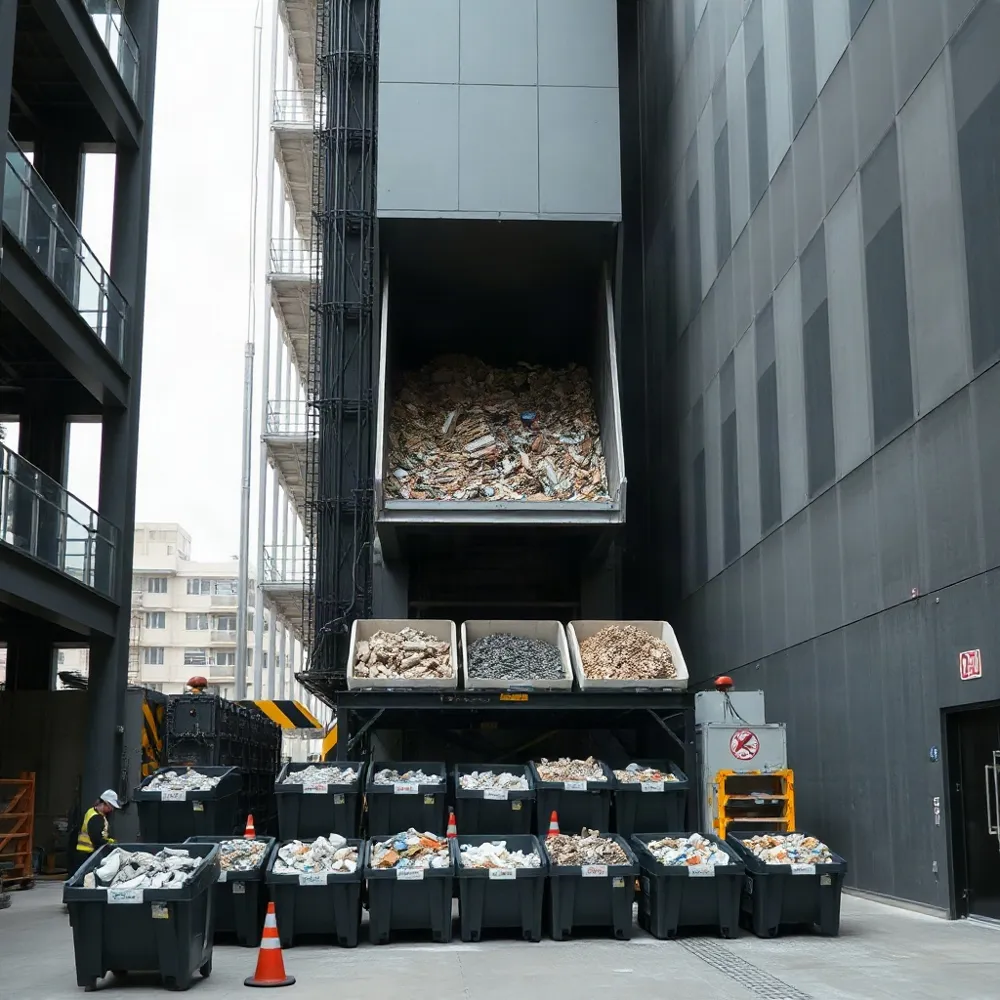
On a vertical construction project, waste handling is a site-logistics task as much as an environmental one. Materials arise across multiple floors, work zones and construction phases, while space for storage and movement is limited. If collection points, access routes and responsibilities are not planned alongside the work, waste can obstruct circulation, become mixed, or require repeated handling. These conditions affect site safety and productivity as well as the potential for materials to be reused or recovered.
A practical approach starts by preventing avoidable waste through design, procurement and careful material handling. Waste that cannot be prevented should be separated at source where feasible, moved along a defined route and sent to an appropriate receiving facility. The project team needs to establish who sorts each stream, where it is held, how it leaves the site and what records will confirm its destination. In the UAE, local procedures vary, so collection and disposal arrangements should be checked against the requirements of the relevant emirate and authority.
A vertical waste chute can support this plan by carrying suitable waste from floor-level intake points to a central collection area. It is not a complete waste-management system on its own. The intake locations must suit the work areas, the vertical route must remain clear, and the discharge point must connect to receiving equipment with enough capacity for the expected waste. Collection timing, safe access for workers and vehicles, and downstream sorting or transport also need to be coordinated.
At Sea Star Engineering, waste chutes form part of a wider portfolio of permanent building access and waste-management systems. For a project team, the useful distinction is between specifying a chute as an isolated item and integrating its layout with the building, collection area and operating plan. That coordination should account for changing construction phases, available space and the materials intended for each route.
Reliable operation depends on maintenance and clear procedures as well as initial design. Teams should define acceptable materials, prevent oversized or unsuitable items from entering the chute, and provide an alternative route for waste that needs separate handling. The receiving area should be arranged so that full containers can be exchanged without blocking site circulation or delaying other operations. Sea Star Engineering’s design, installation and maintenance work can be considered within this broader coordination process, particularly where a building requires a purpose-designed system rather than a standard arrangement.
The sections that follow examine the decisions behind that system: planning waste flows before mobilisation, reducing waste through design and procurement, separating materials, and coordinating movement through the building. They also address chute operation, recovery routes and performance records. Together, these practices make waste handling part of project delivery, with defined routes and responsibilities rather than an improvised task after materials have accumulated.
Plan Waste Flows Before Mobilisation

Waste-flow planning before mobilisation
Waste arrangements are difficult to retrofit once access routes, laydown areas and lifting operations are fixed. A UAE review of construction and demolition waste identifies inadequate planning, missing protocols at project inception and weak segregation as causes of logistical difficulty. It recommends addressing waste across design, construction and end-of-life stages, rather than treating removal as a task to resolve after materials accumulate (UAE construction and demolition waste review).
What should a project waste-management plan establish before work begins?
The plan should name the people accountable for daily controls and specify how each expected waste stream will be prevented, separated, stored, collected and transferred. Include anticipated materials and quantities, collection points, internal transport routes, recovery or disposal outlets, contamination controls, reporting requirements and expected costs. The WBDG construction waste management guidance also recommends identifying responsible personnel, handling methods, receiving facilities and estimated diversion as part of project planning.
For a high-rise project, map each step from the point where waste is produced to its final collection point. Packaging from deliveries, off-cuts from installation and damaged materials may arise in different work zones and at different times. Specify whether teams will move waste by trolley, goods lift, chute or another planned route, and ensure the receiving area can accept the material without disrupting loading, emergency access or other site operations.
The plan should reflect the changing footprint of the work. A floor used for material storage early in construction may later become an active installation area, while fit-out phases can generate different waste from structural work. Assign collection points by phase, confirm when they will move, and identify a fallback location if planned space becomes unavailable. Sea Star Engineering’s waste-management systems form part of its broader work on permanent building access and related building equipment, so waste-route planning can be considered alongside other fixed building systems.
How can teams keep the route workable as construction progresses?
Set a collection frequency that matches the rate of waste generation, storage capacity and site schedule. If a bin regularly fills before the next collection, crews may leave materials in circulation areas or combine streams to clear space quickly. If collections are too frequent, vehicles and staff may make avoidable trips. Review the arrangement against the programme and adjust it when work zones, delivery patterns or material volumes change.
Placement matters as much as the written procedure. Receptacles should be close to the work that generates the material and on a route workers can use without obstructing lifts, corridors, access equipment or material deliveries. Mark each collection point clearly, explain what belongs there and provide a means to report contamination or full containers. These practical controls make segregation easier to follow during busy shifts.
A waste plan also needs to identify who arranges transport and confirm that the receiving outlet accepts the intended materials. UAE procedures depend on the relevant emirate and authority, so contractors should verify applicable requirements and routes before dispatch. The UAE government waste-management guidance notes that local authorities coordinate waste management and that construction and demolition waste is a recognised category in Dubai.
Who needs to agree on responsibilities and controls?
The main contractor should coordinate the plan with subcontractors, property or facility representatives, waste providers and relevant authorities. Contracts and project controls can state who supplies containers, who checks separation, who books collections and who keeps transfer and performance records. A short induction for each trade should explain the site’s waste routes and what to do when a stream cannot be placed in its usual container.
Sea Star Engineering’s published guidance on standardizing waste-management protocols for skyscraper projects describes a Construction and Demolition Waste Management Plan submitted before site work begins as part of project approval. The practical value of that plan depends on carrying its requirements into daily site instructions, subcontractor coordination and collection arrangements.
Finally, test the plan against the actual programme. A collection point that works during one phase may become inaccessible when lifting or façade work begins. Confirm contingency arrangements for missed collections, full containers and rejected loads, and assign someone to revise the route when conditions change. A plan that fits the schedule and physical constraints is less likely to prompt hurried mixed-waste disposal and more likely to keep recovery procedures operating as intended.
Prevent Waste Through Design and Procurement
The most efficient waste stream is the one a project never creates. For construction teams, that means making prevention part of design reviews, specifications and purchasing decisions, rather than relying on sorting after materials reach a collection point. The waste hierarchy prioritizes eliminating or reducing waste first, then reusing suitable materials, recycling what can be recovered, and disposing only of what cannot be managed through a preferable route. The UAE review of construction and demolition waste management supports applying this hierarchy across the building lifecycle.
Which measures can reduce construction waste before it reaches a collection point?
Start with dimensions and specifications. Coordinating designs with standard material sizes can limit cutting, off-cuts and repeated adjustments. Where suitable for the structure and sequence, reusable systems such as modular metal formwork can replace single-use alternatives. These choices need coordination between designers, contractors and suppliers so that standardization does not compromise the required geometry, finish or construction method.
Procurement can prevent avoidable waste too. Teams can specify minimal packaging, buy in bulk when storage and handling conditions allow, and agree with suppliers on returnable packaging or containers. Bulk orders are not automatically efficient: quantities should reflect the programme, storage capacity and risk of damage or deterioration. Supplier discussions should also address delivery timing and packaging formats, especially where the site has limited space for temporary storage.
At site level, protect materials from rain, heat, impact and contamination, and keep usable offcuts identifiable for later work. A designated area for clean, reusable pieces makes it easier for supervisors to check what is available before ordering more. Simple controls, such as covered storage and clear handling instructions, can help prevent materials from becoming unusable before installation.
Prefabrication and modular design can also be assessed early, alongside opportunities to specify reused or recycled materials. Their suitability depends on project requirements, material quality, supplier capacity and access to reliable recovery outlets. Procurement teams should verify that proposed recycled products meet the required technical and quality specifications, and that a viable supply is available when needed. The WBDG construction waste guidance discusses design and purchasing measures such as standard dimensions, reusable systems and reduced packaging.
For UAE projects, these decisions should align with applicable emirate requirements and the project’s waste-management plan. Sea Star Engineering’s work in waste-management systems and related steel and aluminium solutions reflects the practical need to coordinate material handling with the building’s intended operation. Early coordination between the design team, main contractor, specialist contractors and suppliers can identify prevention measures before procurement and site space are committed.
How should teams approach reuse during refurbishment or demolition?
Where a scope includes refurbishment or demolition, allow time in the programme to inspect and remove serviceable doors, windows, fixtures and other components before destructive work begins. Check each item’s condition, intended future use and any potential hazards before approving reuse. A component that appears intact may still need assessment for damage or hazardous substances, and unsuitable items should follow the appropriate handling route.
A practical sequence is to identify likely salvage items during planning, assign responsibility for their inspection and removal, and confirm where accepted materials will go. This avoids treating salvage as an informal task left to the last days before demolition, when time pressure can make careful removal difficult. Reuse is only a sound choice when components are safe, fit for purpose and have a confirmed destination.
Taken together, these measures reduce the volume of material requiring internal transport, sorting and removal. They also make later collection arrangements more manageable by keeping avoidable offcuts, damaged stock and excess packaging out of the waste stream. Prevention is therefore not a substitute for site segregation; it is an upstream control that helps the remaining waste flows start in better condition.
Separate Materials at Their Source
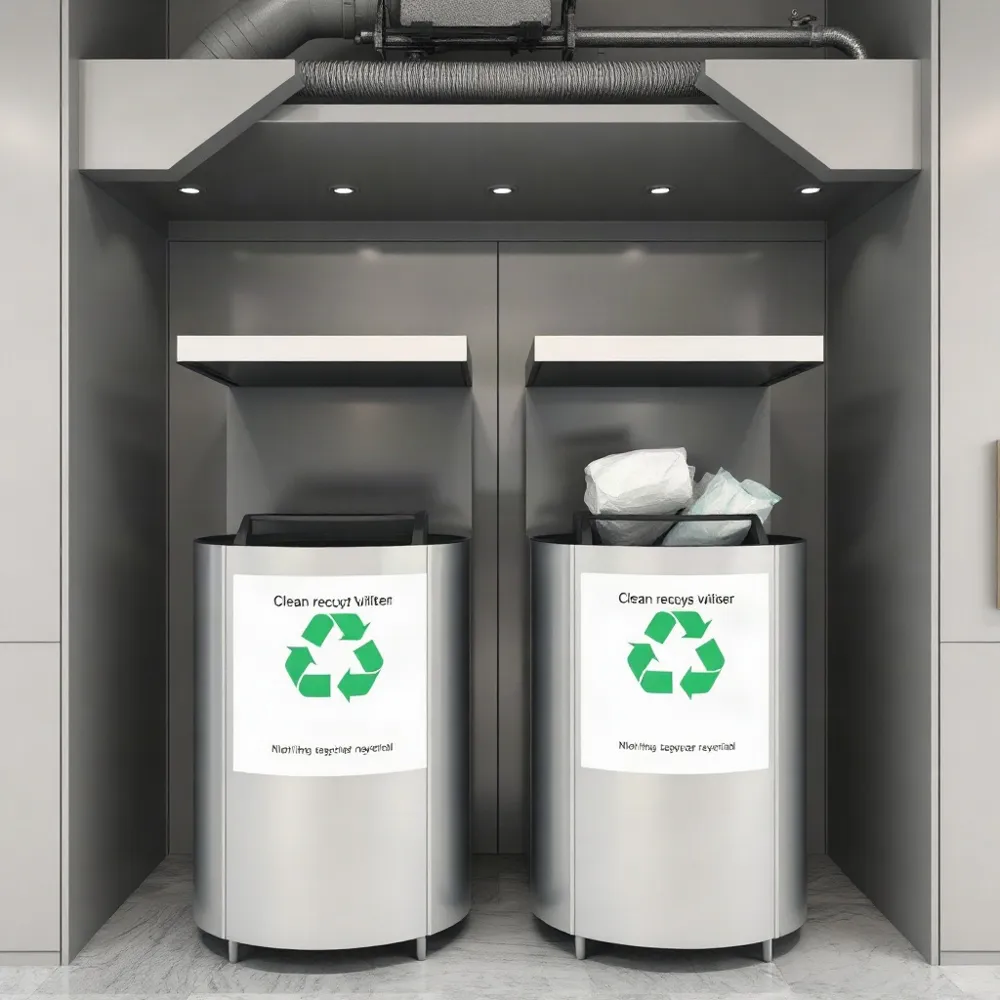
Source separation means sorting waste close to where it is generated, rather than combining different materials for later handling. On a construction site, this can make loads more suitable for reuse or recycling and help avoid contamination that complicates recovery. The UAE review describes on-site segregation as a general first step before collection and transport by government-approved providers, subject to relevant environmental guidelines and permits. Teams should confirm the applicable procedures with the authority in the emirate where the project is located.
Why is source separation important on a construction site?
Construction waste can include concrete and masonry, metals, timber, plastics, glass, paper and cardboard, gypsum board, packaging, and materials from site preparation. Some streams may be suitable for reuse or recycling, but their recovery depends on condition, contamination, local processing facilities, and market demand. Keeping materials separate at the point of generation gives receiving facilities a clearer, more consistent load to assess.
Commingling may appear convenient when work is moving quickly, but mixed loads can be harder to sort and may limit the options available for reuse or recycling. The WBDG construction waste guidance notes that source separation can support diversion, provided the site has workable collection arrangements, enough space, and trained staff. The practical aim is not to create a separate container for every item, but to keep important streams apart in a way that matches the project and the recovery routes available.
On high-rise projects, collection points need to fit the movement of workers and materials through each work area. Place clearly labelled receptacles along workers’ natural routes, so correct sorting does not require a long detour or interrupt a task. Sea Star Engineering’s waste-management systems are part of a wider portfolio that includes purpose-designed solutions for complex building operations, making the relationship between collection points, vertical movement, and receiving arrangements a practical design consideration.
Set the number and size of containers according to expected waste streams, available floor or site space, and collection frequency. Too few containers may encourage mixing; too many can obstruct work areas and access routes. Include sorting instructions in site induction and subcontractor briefings, then use routine checks to spot mis-sorted material, overflowing receptacles, or labels that are unclear. Supervisors can correct problems before contamination spreads through a larger load.
How should hazardous and specialist materials be handled?
Asbestos-containing and lead-containing materials, chemicals, solvents, contaminated materials, some lamps, and electronic waste should not be treated as ordinary construction debris. Identify and characterize these materials, then arrange suitable separation, storage, collection, and treatment through the appropriate specialist channels. The right controls depend on the material and applicable requirements, so site teams should confirm the handling route with qualified personnel and the relevant authority.
Keep specialist materials apart from general recyclables and inert waste, and make sure site procedures explain who is responsible for identification and escalation. If a material’s composition or condition is uncertain, avoid placing it in a general container until it has been assessed. This prevents an unknown item from contaminating a larger stream and helps ensure that workers and downstream handlers receive clear information.
Which UAE requirements should site teams check?
The UAE review describes a general sequence in which waste is segregated on site, then collected and transported by government-approved providers in line with environmental guidelines and permits. Requirements and procedures can differ by emirate and waste type. The UAE government’s waste-management guidance directs readers to local authorities and relevant controls, so project teams should verify current requirements for the project location rather than assume that one emirate’s process applies nationwide.
Dubai provides a specific example: the UAE review reports that Dubai Municipality Technical Guideline No. 7 requires waste generators to segregate inert aggregates, metals, timber, dry recyclables, and hazardous materials. This is a Dubai guideline, not a uniform rule for every emirate. Contractors should check the applicable local guidance and permits when defining waste categories, collection arrangements, and approved destinations.
A workable separation system connects the materials generated in each area with a labelled collection point and a verified onward route. Sea Star Engineering’s technical focus on building access and waste-handling systems reflects the need to coordinate equipment and site procedures with the building’s layout. When sorting arrangements are planned around actual work patterns and local recovery options, teams can maintain cleaner streams without placing unnecessary obstacles in the construction process.
Coordinate Collection Through the Building

A waste route in a multi-storey building is a connected sequence, not simply a chute. It begins where waste is generated on a floor and continues through internal collection, vertical transfer, receiving equipment, temporary site storage and onward transport. Each handoff needs a defined route, operating procedure and responsible party so waste does not accumulate in corridors or arrive at the wrong collection point.
How does a waste chute fit into a vertical construction waste route? Floor-level hopper doors provide access to a vertical passage. Bagged waste enters through an intake door and moves by gravity to a central receiving point, typically a bin or compactor. From there, a site team or waste provider moves it to the designated storage area and arranges transport to an appropriate recovery or disposal destination.
A chute may reduce the need for workers to carry waste through shared corridors and lifts, and can bring collection to one central point for building staff. These are potential operational benefits, not automatic results. They depend on a route suited to the building, correct use, a workable discharge arrangement and regular maintenance.
Design the route as one system
The intake doors, chute route, discharge point and receiving equipment need to function as a coordinated system. Engineers should consider the building’s use, the types and volumes of waste expected, the available space, and how collections will be carried out. A discharge point that cannot be accessed by staff or collection vehicles can undermine the convenience of vertical transfer.
The receiving arrangement may use bins, compactors, waste-sorting equipment or, where suitable, an automated collection system. The choice should reflect the project’s collection method and the destination’s acceptance criteria. The chute does not replace source-separation rules: if different materials need separate handling, the project must specify how they are kept apart before or after entering the chute.
For construction teams, this means coordinating floor-level handling with the ground-level logistics plan. The operating plan should still assign responsibility for clearing receiving equipment, moving waste to temporary storage and booking onward collections.
What safety and hygiene provisions should be considered?
Some chute systems may include a One-Door-Open interlock, which permits only one hopper door to be open at a time. This is intended to reduce the risk of someone being struck by falling material while using another floor’s intake. Whether the feature is appropriate, and how it should operate, needs to be established through project-specific design and review.
Odour-control provisions, fire-rated doors and automatic fire suppression are also possible system features, not universal components. Their selection should reflect the building’s use, the waste stream, applicable fire and building requirements, and approvals from the relevant authorities. The receiving area also needs suitable access for inspection, cleaning and collection without obstructing other site operations.
Routine controls matter as much as equipment. Site procedures should state what may enter the chute, how waste must be bagged, and who checks the intake and discharge points. Overloading, placing oversized items in the passage or leaving waste unsealed can lead to blockages, odours or pest issues. Cleaning and maintenance arrangements should therefore be agreed before the system enters service.
The UAE’s official waste guidance describes local authority roles and different collection and treatment arrangements, so the onward route should be confirmed with the relevant emirate and approved service providers rather than assumed to be uniform nationwide (UAE waste-management guidance). A 2024 review of UAE construction and demolition waste management also describes the general sequence of on-site segregation, collection and transport by approved providers, followed by recovery, treatment or disposal (UAE construction and demolition waste review).
Before mobilization, teams should walk the route from each served floor to the collection vehicle interface. Confirm that the receiving point has adequate capacity and access, that responsibilities are clear at each transfer, and that the chosen equipment supports the project’s segregation and collection procedures. This practical coordination helps prevent a vertical transfer system from becoming an isolated component rather than a usable part of site logistics.
Maintain Safe and Reliable Chute Operation
A chute only works reliably when its users, intake points, vertical passage and receiving equipment are managed as one operating system. On a construction site, this means setting clear rules before the first waste is deposited, then keeping those rules in place as trades and work areas change.
What practices help prevent common waste-chute problems?
Tell workers and building users which materials the chute accepts, whether waste must be bagged, and how bags should be sealed. Prohibit overloading and oversized items, and identify materials that must go through a separate route. These controls help limit blockages, spills, odours and pest problems. They also protect downstream equipment, such as a compactor or collection container, from loads it cannot safely accept.
Keep instructions brief and visible at each intake point, and include them in subcontractor inductions and housekeeping checks. Waste-management systems can be specified around project requirements, so the chute arrangement and receiving equipment should be considered together rather than treated as separate packages.
The operating plan should name accepted waste, user responsibilities, inspection ownership, cleaning frequency and the limits of the receiving equipment. The right arrangement depends on the building, the materials handled and the applicable local requirements. UAE waste rules are implemented through federal and emirate-level frameworks, so project teams should confirm applicable procedures with the relevant authority (UAE waste-management guidance) before setting site instructions.
How should teams inspect, clean and respond to faults?
Assign routine checks to a named role, such as the site logistics supervisor during construction or the facility team after handover. Checks should cover intake doors and their closures, visible damage, signs of obstruction, cleanliness, odours, and the discharge area. Set a cleaning schedule suited to the waste type and frequency of use, and record completed inspections and any corrective work.
A blockage, damaged door, abnormal noise or unsafe condition needs a clear escalation route. Staff should stop use of the affected chute, secure the relevant intake points and notify the responsible supervisor or maintenance provider. Do not ask workers to clear an obstruction by reaching into the passage. The receiving area should also be checked: a full or incorrectly positioned container can interrupt discharge and create a hazard.
Construction teams can use a simple maintenance log to record faults, actions taken and return-to-service approval. The log gives the next shift and the eventual operator a shared record, reducing the chance that a recurring issue is mistaken for a one-off event. General construction-waste guidance likewise emphasizes defined handling procedures and coordination among site teams and service providers (WBDG construction waste management guidance).
How do site controls carry through to building operations?
Where a chute will remain in use after project completion, agree the changeover with the building operator or facility manager before handover. Confirm who will inspect and clean the system, who responds to faults, how waste is removed from the discharge point, and what training or operating documents must be provided. Coordination between the installed arrangement and the operator’s procedures is an important part of project delivery for waste-handling systems in buildings.
Fire and life-safety provisions also require project-specific review. Some systems may use fire-rated doors or automatic suppression, but these features are not universal and should not be assumed to meet a project’s obligations without verification. The design team should confirm relevant requirements with the authority having jurisdiction and coordinate the chute with the building’s fire strategy. A documented operating and maintenance plan then helps preserve the intended function throughout construction and occupancy.
Connect Site Handling to UAE Recovery Routes
Segregating waste on site is only useful if each separated stream can be collected, transported and accepted at its intended destination. Before loading begins, the project team should check what the receiving facility accepts, how materials must be prepared and whether any contamination limits apply. A load that does not meet the facility’s criteria may be rejected, leaving the contractor to arrange further handling and transport.
This connection matters on high-rise projects, where waste passes through several stages between the work face and the recovery facility. Sea Star Engineering’s waste-management systems and chutes address the building-side movement of materials; project procedures still need to identify the collection provider, approved route and final destination for each stream. Recording those arrangements in the site protocol helps align floor-level handling with downstream requirements.
How should a contractor confirm that separated waste reaches an appropriate UAE facility?
Start by checking the requirements of the emirate and authority responsible for the project. Confirm that the collection and transport arrangements are appropriately authorized, and ask the receiving facility to confirm its acceptance criteria for each material stream. Before dispatch, ensure the load matches those criteria. Keep records that identify the waste type, collection and transport route, receiving destination, and relevant handling documentation.
The UAE review describes a general sequence of on-site segregation, collection and transport by government-approved providers, followed by recycling, recovery, treatment or disposal in line with applicable guidelines and permits. Its review of construction and demolition waste management also emphasizes that the final route depends on the material and applicable local procedures. Project teams should therefore confirm arrangements for each stream rather than assume that one provider or destination is suitable for all site waste. The UAE review of construction and demolition waste management provides context.
The review reports that UAE construction and demolition waste recycling reached 91% by 2022 following legislative measures. This national figure provides context for the development of recovery activity, but it is not a project-level result or a guarantee that a particular site will achieve the same rate. Actual performance depends on the waste generated, segregation quality, available services and whether receiving facilities accept the loads.
Why should teams check local procedures before dispatch?
Waste management in the UAE involves coordination with local authorities, and operational procedures can differ by emirate. The official UAE portal outlines the federal framework while directing users to local requirements and services. Contractors should verify applicable permits, collection arrangements, destination rules and charges with the relevant authority instead of treating a process used on one project as a uniform national procedure. UAE official waste-management guidance.
Public systems illustrate how collection and recovery may be organized, but they should not be mistaken for automatic proof of a contractor’s compliance. The UAE portal describes Dubai’s Rasid system as monitoring registered waste-management companies and tracking collection and transport in real time. It also describes collection and treatment routes in Abu Dhabi, including facilities that recover materials from mixed waste. Project teams still need to retain their own records showing where their loads went and how they were handled.
Requirements may also depend on the project’s location and applicable building framework. For example, the UAE review reports that Dubai’s Al Sa’fat regulation requires at least 50% by volume or weight of construction and demolition waste to be diverted from landfill for reuse or recycling. That example should not be treated as a universal requirement for every UAE project. Confirm which rules apply, what evidence is required and which destinations are acceptable before setting project targets.
A practical protocol can make this chain of responsibility clear: name the party responsible for each stream, specify the collection provider and receiving facility, list acceptance conditions, and state which records must be retained. Sea Star Engineering’s published guidance on standardizing waste-management protocols for skyscraper projects reinforces the value of defining waste procedures before site operations begin. When the building route, collection plan and recovery destination are coordinated, teams can manage waste movements with fewer assumptions and clearer accountability.
Track Quantities and Verify Performance
A waste plan is useful only if site records show what happened in practice. Consistent measurement helps project teams identify gaps between planned and actual handling, check whether separated materials reached their intended destinations, and make informed adjustments as work progresses.
Which site-level indicators can help assess waste-handling performance?
Record quantities generated, segregated, reused, recycled and sent to landfill. Add collection dates, material types, receiving destinations and the status of each load, including any rejection and the reason given. Where weighing data are unavailable, use a consistent estimate method and label estimates clearly so they are not mistaken for measured quantities.
Compare these records with the project waste plan and investigate discrepancies. For example, a rise in mixed loads may point to unclear sorting instructions, insufficient collection capacity or changes in the work sequence. Reviewing collection efficiency, costs and progress against project targets alongside diversion figures gives a more useful picture than a single headline percentage.
The UAE review identifies quantities generated, recovered and disposed of as useful indicators for assessing waste management. It also describes BIM and material passports as aids for material selection, resource allocation, waste monitoring and tracking materials through a building’s lifecycle, rather than as proof that a project has achieved a particular outcome. The review of construction and demolition waste management in the UAE discusses these approaches within a broader lifecycle framework.
How can digital records support day-to-day decisions?
Digital platforms, sensors and tracking systems can bring together data on waste generation, container status, collection, processing and compliance records. Their availability and scope vary by project. Teams should select tools that match the site’s operational needs and record-keeping obligations, rather than assume that every system provides live data or connects automatically to external providers.
Timely information can help supervisors identify containers approaching capacity, coordinate pickups, check collection routes and respond to delays before they disrupt site logistics. A dashboard can flag an exception, but staff still need to confirm conditions on the ground and apply judgment when schedules, access constraints or material types change.
For high-rise work, the collection arrangement itself affects what can be measured. Sea Star Engineering designs, supplies, installs and maintains waste chutes, so project teams can consider the vertical handling route alongside the receiving and collection setup when defining where and how waste data will be captured.
How should project teams keep records traceable across the waste chain?
Agree on shared terms, units, material categories and document responsibilities between site teams, contractors, transport providers and receiving facilities. Records should connect the waste generated on site to its collection and destination, while noting missing information or changes in route. The UAE’s official guidance notes that waste management is coordinated through local authorities and that projects should follow the procedures of the relevant emirate and authority. UAE waste-management guidance is a starting point for checking that local context.
Consistent information exchange can support traceability, but disconnected systems and different material classifications can make records difficult to reconcile. A project’s waste-management plan should set out documentation and reporting responsibilities early. Teams can also refer to waste-management protocols for high-rise projects when establishing procedures and responsibilities.
Use reporting to review both performance and cost. Compare collection and transport charges, rejected loads, recovery outcomes and disposal costs with the project’s plan, then investigate material differences. Results depend on site conditions, available services, transport options, regulations and recovery markets; waste reduction can save money or add cost depending on how it is planned and managed. Records make those trade-offs visible and provide a sound basis for improving the next phase of work.
Build Circularity Into the Project Lifecycle
A circular approach means preventing waste where possible, keeping materials and components in use through reuse or recovery, and planning their movement and destination across the project lifecycle. Disposal is a last resort, not the default endpoint. This connects design choices with construction practices and end-of-life planning, rather than treating material recovery as a task that begins only when waste is generated.
What does a circular approach mean for construction waste handling?
At the design stage, teams can consider whether components can be separated without damage, whether materials can be identified later, and whether there may be an outlet for them when a building is altered or dismantled. Design for disassembly, component tracking and reverse logistics are useful planning principles, particularly where buildings contain modular or replaceable elements. These approaches are not specific to high-rise construction, but can help project teams consider recovery before materials become difficult to access.
Component records can note material type, location, condition and potential reuse route. During construction, those records can support decisions about protecting items for later use, while facility managers may draw on them during refurbishment. For large buildings with repeated components, this information can make it easier to identify what is suitable for salvage and how it can be removed. Sea Star Engineering’s custom-designed access solutions, including purpose-made cradles for window replacement in occupied buildings, illustrate how access planning can support component replacement without assuming that the entire façade must be removed.
How can recovered materials return to use?
Recovered materials can re-enter construction markets as reusable components or processed secondary materials, reducing demand for virgin resources where the material is suitable and there is a willing buyer. That outcome depends on condition, contamination, quality requirements, demand and available processing or reuse outlets. Teams should assess these factors before setting recovery targets, since a material is not circular merely because it has been separated from general waste.
A review of construction and demolition waste management in the UAE describes a lifecycle approach based on reducing, reusing and recycling, supported by local measures and project procedures. It also reports national progress in recycling, but that figure should not be read as a result achieved on every site or as a guarantee for a particular project. The UAE review of construction and demolition waste management provides context for the policy and operational factors involved.
The UAE’s official waste-management guidance identifies recycling, waste-to-energy and resource recovery among national approaches, while local authorities oversee procedures. Contractors should therefore confirm the applicable emirate requirements and the receiving facility’s acceptance criteria before assigning a destination. UAE government waste-management guidance is a starting point for understanding this wider framework, not a substitute for project-specific checks.
Which recovery routes suit construction materials?
Treatment options vary with the waste stream and the infrastructure available. Mechanical processing may suit some clean, inert materials, while biological treatment is relevant to biodegradable material rather than mixed rubble. Thermal or chemical treatment may apply to particular waste types under appropriate controls. Waste-to-energy methods, including incineration with energy recovery, anaerobic digestion, gasification and pyrolysis, are not suitable for every construction stream and should not be treated as a universal alternative to reuse or recycling.
For projects in the UAE, Sea Star Engineering’s waste-management systems can form part of the physical handling arrangements that move separated material through a building. The project team still needs to connect those arrangements to viable collection, transport and recovery routes. A chute or collection point alone does not establish that material will be reused or recycled.
Practical circularity depends on daily controls. Keep clean material streams separate, protect reusable components from damage and contamination, and record quantities and movements so the destination can be verified. Before collection, confirm that the intended receiver accepts the material and that transport arrangements are in place. These steps link project design and material recovery to the site procedures that determine what happens in practice.
Make Waste Routes Part of Project Delivery
On a vertical project, waste handling succeeds when every step works as part of one operating system. Prevention and source separation must connect to internal movement, collection equipment, transport, authorized recovery routes and records that show where materials went. A break in that chain can turn a recoverable stream into a mixed load or leave the project unable to verify its final destination.
For teams working with Sea Star Engineering on building waste-chute systems, the practical design question is how floor-level intake points, the vertical passage and receiving equipment fit the construction sequence and site layout. The route should support safe movement without obstructing work areas, and its operating arrangements should remain clear as access, floor use and waste volumes change.
Project teams can turn that systems view into delivery controls by assigning ownership for each handoff. The contractor, subcontractors, facilities staff and waste provider need clear instructions on sorting, temporary storage, collection timing and documentation. Workers also need practical training at the point of disposal, with supervision to address contamination and misuse.
Set controls that work on site
Before mobilization, map the route from generation point to receiving facility. Check available space, lifting and access constraints, collection vehicle movements, fire and hygiene controls, and the arrangements needed when equipment is unavailable. For a chute installation, Sea Star Engineering’s custom-design approach can account for building-specific access and waste-handling requirements rather than treating every project as having the same configuration.
Maintenance is part of that route, not a separate task. Define inspection, cleaning and fault-reporting responsibilities, and provide a fallback procedure for blocked or unavailable equipment. Keep collection areas and containers suitable for the material streams they receive. Confirm that the intended facility accepts each stream and that the transport provider can meet the project’s handling and documentation requirements.
The applicable rules are not identical across every emirate or project. The UAE government’s waste-management guidance describes a framework involving federal requirements and local authority procedures. Project teams should confirm current classification, permits, approved providers, fees and reporting expectations with the relevant authority and service providers before dispatch.
A UAE review describes construction and demolition waste procedures that include on-site segregation and collection through government-approved providers, while emphasizing that project conditions affect implementation. See the UAE construction and demolition waste review. Treating this as an operational check, rather than assuming a single process applies everywhere, helps keep the planned route aligned with local requirements.
Finally, compare actual records with the project plan. Track quantities generated, separated, reused, recovered and disposed of, and investigate rejected loads, missed collections or recurring equipment faults. Those records can guide adjustments to container placement, worker instructions and collection schedules. They do not guarantee a particular diversion rate or cost result: outcomes depend on planning, workforce practice, material quality, available infrastructure and consistent follow-through.