Advancing Circular Construction Through Standardized Waste Protocols
The United Arab Emirates has established a sophisticated framework for Construction and Demolition Waste (CDW) management, achieving a 91% recycling rate as of 2022. This progress is largely driven by Federal Law No. (12) of 2018, which mandates strict segregation-at-source protocols for non-hazardous materials. By moving away from fragmented disposal methods, the industry is increasingly aligning with the national UAE Net Zero 2050 goal through systemic waste reduction.
Engineering firms and facility managers face a distinct requirement to integrate these standards into project lifecycles. Projects must comply with regional green building certifications such as Estidama in Abu Dhabi or Al Sa’fat in Dubai, which require formal waste management plans. While regulatory compliance is the baseline, professional standardization through Building Information Modeling (BIM) helps teams optimize material estimation and minimize off-cuts. Successful site management now prioritizes the reuse of materials, such as utilizing recycled aggregates for infrastructure, ensuring that high-rise developments serve as long-term assets within a functional circular economy.
Engineering Sustainable Waste Infrastructure for High-Rise Efficiency
In what ways do automated waste management chutes integrate into modern high-rise facility operations? Modern high-rise architecture requires vertical logistics that move beyond manual refuse collection, which often creates bottlenecks in elevators and shared corridors. Integrating automated waste systems provides a closed-loop transport method that maintains sanitary conditions while preserving the functional space of residential and commercial floors. By leveraging automated garbage chutes equipped with sensor-activated controls, property managers gain real-time visibility into system usage and fill status, allowing for data-driven maintenance scheduling that prevents overflow.
The efficacy of these systems relies heavily on environmental controls that manage air quality. High-traffic buildings benefit from multi-stage filtration units, including HEPA and carbon filters, which neutralize odors at the source. This is critical in the Middle East, where high ambient temperatures can accelerate the decomposition of organic waste. Sea Star Engineering supports these standards by providing tailored steel and aluminium solutions that incorporate ventilation and automated cleaning cycles, ensuring that waste handling remains discreet and hygienic in compliance with local authorities like the Dubai Municipality.
Regulatory safety remains the primary constraint for high-rise infrastructure. Under Building Regulation Design Guidelines, all chute systems must be constructed from non-combustible materials and include automated fire-rated doors. Unlike standard or aging chute systems that may lack modern safety interlocks, purpose-made installations from Sea Star Engineering are engineered with heat-sensing triggers that seal floors during a fire event. This technical precision prevents smoke migration and satisfies UAE Civil Defense requirements, effectively balancing operational efficiency with the strict safety mandates required for regional high-rise assets.
| Feature | Functional Benefit | Regulatory Alignment |
|---|---|---|
| Fire-Rated Components | Containment of smoke and flame | Civil Defense Standards |
| HEPA/Carbon Filtration | Odour and pathogen control | Hygiene and Health Codes |
| IoT Sensor Monitoring | Optimized collection cycles | Waste Diversion Targets |
Legislative Compliance and On-Site Segregation Standards
The UAE regulatory environment for construction waste is defined by Federal Law No. (12) of 2018, which mandates that waste producers must practice strict segregation at the source. This framework requires that construction and demolition materials, such as concrete, metal, and timber, remain separated from other streams to prevent cross-contamination and facilitate effective recovery.
For project approval, developers must submit a Construction and Demolition Waste Management Plan (CDWMP) prior to initiating any site work. In Dubai, Technical Guideline No. 7 further enforces these requirements, compelling firms to implement systematic on-site sorting protocols. Sea Star Engineering assists property managers in aligning these site layouts with local standards by integrating permanent access solutions that facilitate efficient waste removal, whereas many generic providers often neglect the architectural integration necessary for compliance with these municipal mandates.
Maintaining accurate records is a vital component of regulatory adherence. Operators are required to utilize e-manifest systems like Bolisaty to track waste movement, supported by weighbridge receipts and formal disposal certificates. These documents serve as the primary evidence during government audits and are essential for securing certifications such as Estidama or Al Sa’fat.
Digital Transformation and BIM in Circular Construction
The integration of Building Information Modeling (BIM) has become a technical requirement for engineering firms aiming to reduce Construction and Demolition Waste (CDW) in the UAE. By simulating construction sequences before breaking ground, BIM enables project teams to implement design-out-waste strategies that identify potential material clashes and optimize layouts. This precision in material estimation directly minimizes on-site off-cuts and the rework cycles that frequently inflate waste volumes.
Real-time monitoring elevates these digital models from static designs to active operational tools. When coupled with Internet of Things (IoT) sensors, managers can track actual material consumption and waste generation rates against projected benchmarks. This data-driven visibility allows for precise adjustments to site logistics, ensuring that resource allocation remains aligned with circular economy goals throughout the building lifecycle.
Standardizing these digital workflows helps projects meet the rigorous CDWMP documentation requirements mandated by regional sustainability frameworks like Estidama. By establishing clear material tracking protocols, engineers can maintain transparent records of secondary materials, facilitating their eventual recovery or reuse in future development phases.
Technical Considerations for Permanent Building Maintenance Systems

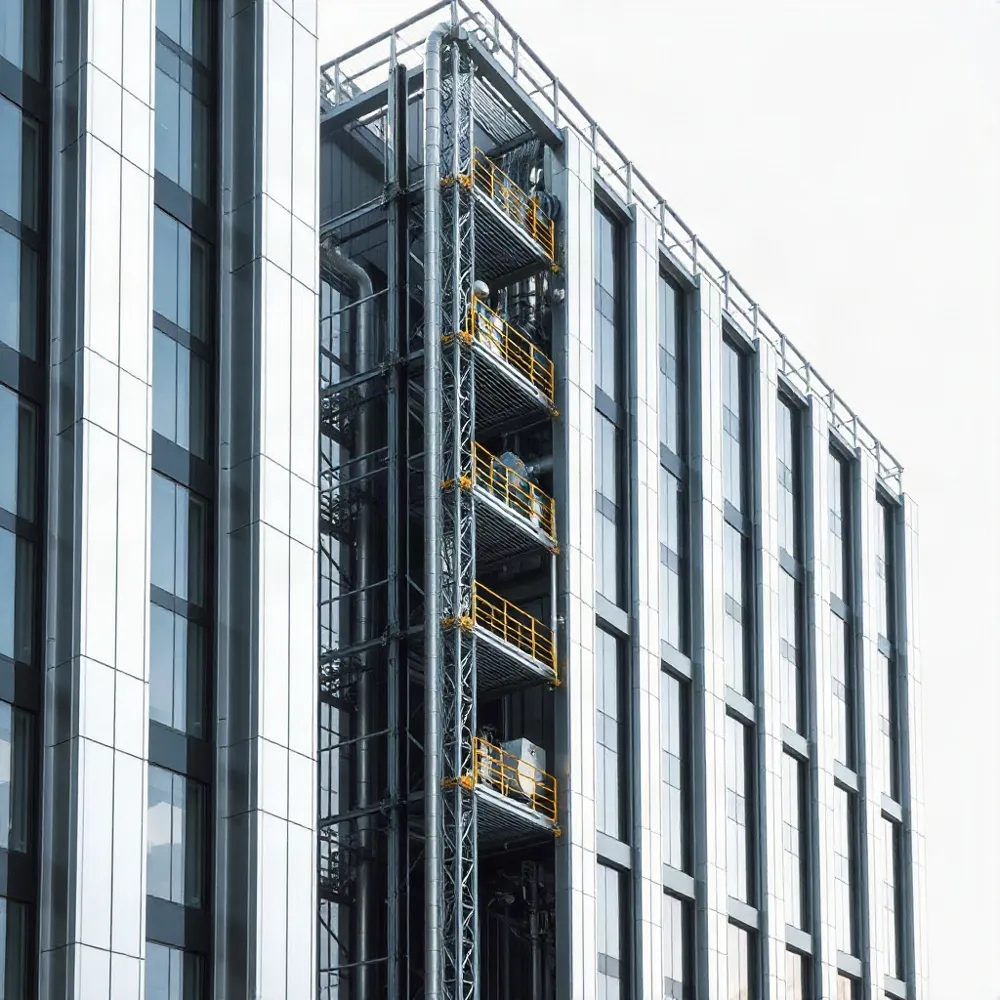
Installing permanent Building Maintenance Units (BMU) systems in the Middle East requires rigorous structural analysis to accommodate rooftop load capacities and specific wind-load calculations tailored to the region’s extreme meteorological conditions. Engineers must prioritize building-specific geometry, utilizing telescopic or articulated jibs and slewing mechanisms to ensure full façade coverage across complex architectural setbacks and intricate elevations. While many standard units lack the reach required for modern high-rise geometry, bespoke, purpose-made cradles can be designed to navigate difficult façade profiles where off-the-shelf equipment fails to provide necessary access.
Integration with the building management system (BMS) is essential for operational efficiency, providing facility managers with real-time data on unit status and usage cycles. Advanced safety features, such as redundant wire rope control systems and automated platform restraint mechanisms, are critical to mitigate risks associated with high-altitude operations in high-wind environments. Unlike mass-produced solutions that require frequent scaffolding or stop-start maintenance cycles, custom safety locking systems allow for window replacement and façade maintenance in fully occupied buildings without disrupting residents.
The design phase must account for site-specific installation feasibility, including heavy-lift requirements for rooftop assembly and the long-term maintenance of aluminum and steel components against regional heat and humidity. These systems must comply with local safety standards, ensuring long-term reliability for façade preservation. Through a combination of tailored engineering and adherence to stringent safety protocols, property owners can reduce operational downtime and avoid the inefficiencies typical of generic access solutions.
Operational Gains from Purpose-Made Access Solutions
How do purpose-made, cradle-based access systems improve operational efficiency compared to traditional scaffolding in occupied commercial properties? Purpose-made Building Maintenance Units (BMU) systems enhance operational efficiency by providing a permanent, roof-mounted solution that eliminates the multi-day mobilization and strike times inherent in traditional scaffolding. By bypassing the need for ground-up support structures, these systems remove site congestion at the podium level and mitigate the risk of damage to sensitive hardscaping or common areas. From an engineering perspective, cradle systems offer precise vertical positioning along the building envelope, significantly reducing the downtime required for localized façade inspections or glass replacement.
Unlike scaffolding, which necessitates extensive exterior footprint occupation, cradles operate independently, ensuring that tenant activities and building ingress remain entirely unaffected. seastareng.com specializes in designing these permanent access solutions, providing custom-engineered cradles that address the specific geometry of high-rise structures while adhering to local safety standards. This streamlined approach minimizes site management overhead and provides a compliant method for long-term maintenance in high-density urban environments. Where modular systems from other vendors might struggle with complex architectural features, seastareng.com offers tailored aluminum and steel configurations that maintain structural integrity during repetitive vertical operations.
| System | Operational Footprint | Deployment Strategy |
|---|---|---|
| Scaffolding | High (Ground to roof) | Temporary/Manual assembly |
| BMU | Minimal (Roof only) | Permanent/Automated |
Prioritizing Safety and Regulatory Maintenance Standards
What specific safety standards should facility managers prioritize when maintaining permanent building access equipment in the Gulf region? Facility managers must ensure all permanent building access equipment complies with a combination of federal labor laws and specific local authority mandates, such as the ADOSH-SF codes in Abu Dhabi and Dubai Municipality’s Technical Guideline GU67. Beyond local regulatory adherence, equipment must be maintained in alignment with international standards like EN 1808 to guarantee the mechanical integrity of hoisting and safety systems.
It is non-negotiable that operators hold recognized certifications, such as the IPAF standard often required by regional authorities for powered access equipment. Facility managers should prioritize rigorous, scheduled load testing and documented inspections of all Building Maintenance Units (BMU) and cradle systems to prevent structural failure or catastrophic accidents.
Where operations occur near electrical assets or critical infrastructure, managers must secure explicit site permits to satisfy the region’s strict safety oversight requirements. This includes verifying that all electrical interfaces for roof-mounted systems are inspected for regional environmental resilience, such as dust and moisture ingress protection. Regular audits of these systems not only prevent potential downtime but also ensure that all hardware, including aluminum cradles and secondary steel components, remains fully compliant with the safety regulations governing high-rise maintenance across the UAE.
Future-Proofing High-Rise Assets through Integrated Systems
Achieving long-term asset value in the Middle East requires a departure from fragmented maintenance strategies in favor of integrated waste management and access protocols. By harmonizing permanent façade maintenance infrastructure with circular waste-handling systems, property managers can reduce operational disruption while meeting the stringent requirements of the UAE Circular Economy Policy.
The adoption of Product-as-a-Service models allows facility owners to prioritize high-performance engineering over short-term savings. At seastareng.com, we design purpose-built systems that account for regional environmental stressors, ensuring that mechanical assets maintain compliance with Federal Law No. 12 of 2018 throughout their lifecycle. Unlike off-the-shelf equipment that often fails to adapt to specific structural load capacities or site-specific refuse volumes, our turnkey solutions are engineered to integrate seamlessly with existing building footprints.
Standardized, research-backed protocols are critical for ensuring operational reliability. As sustainable construction transitions from a regulatory target to a baseline expectation, the alignment of automated waste infrastructure and maintenance access remains the primary driver of building longevity. Future-proofing your asset is not merely about meeting today’s sustainability quotas, but about building an operational foundation that can evolve alongside the region’s commitment to net-zero goals.