The High Cost of Glazing: Why Maintenance Matters
Glass façades in the Middle East endure harsh environmental stresses, including intense UV radiation, abrasive sand, and saline air, which accelerate the degradation of sealants and frame components. These factors turn basic upkeep into a massive operational challenge.
The scale of this burden is reflected in the UAE industrial facade cleaning and maintenance market, now valued at approximately USD 1.2 billion. With a government mandate requiring annual inspections for commercial properties, facility managers must move beyond reactive repairs to maintain structural and aesthetic integrity.
Neglecting these systems risks more than just visual decay. Proactive maintenance is essential to avoid the long-term operational downtime associated with glass failure and falling debris. At seastareng.com, we focus on providing permanent access solutions that facilitate regular care, ensuring that high-rise assets remain compliant, safe, and efficient throughout their lifecycle.
Sealant Failure and IGU Fogging
The primary cause of Insulating Glass Unit (IGU) failure is the gradual degradation of organic sealants. These components typically have an expected service life of 15 to 40 years, though the extreme environmental stressors prevalent in the Middle East significantly accelerate this breakdown. Intense UV radiation and high levels of ambient pollution compromise the chemical integrity of the sealant, eventually allowing moisture ingress that manifests as internal fogging, hazing, and impaired optical clarity.
To maintain structural performance and aesthetic quality, property managers should implement proactive diagnostic techniques. Using frost point testers to measure moisture levels inside the glass units allows engineers to accurately model the remaining service life. We recommend scheduling comprehensive, professional performance reviews of facade glazing systems every 5 to 10 years to identify premature failures before they escalate into widespread hazards.
Extending the operational lifespan of existing glazing is often possible through targeted maintenance interventions. Regularly clearing weep holes within aluminium framing ensures proper drainage, preventing water accumulation that stresses the seals. Furthermore, the systematic removal of failed gaskets and the application of fresh exterior sealants can prevent further degradation. For buildings seeking tailored maintenance, seastareng.com provides specialized engineering solutions designed for high-rise environments where traditional off-the-shelf equipment often fails to reach critical facade zones.
Wind Loads, Thermal Stress, and Glass Strength
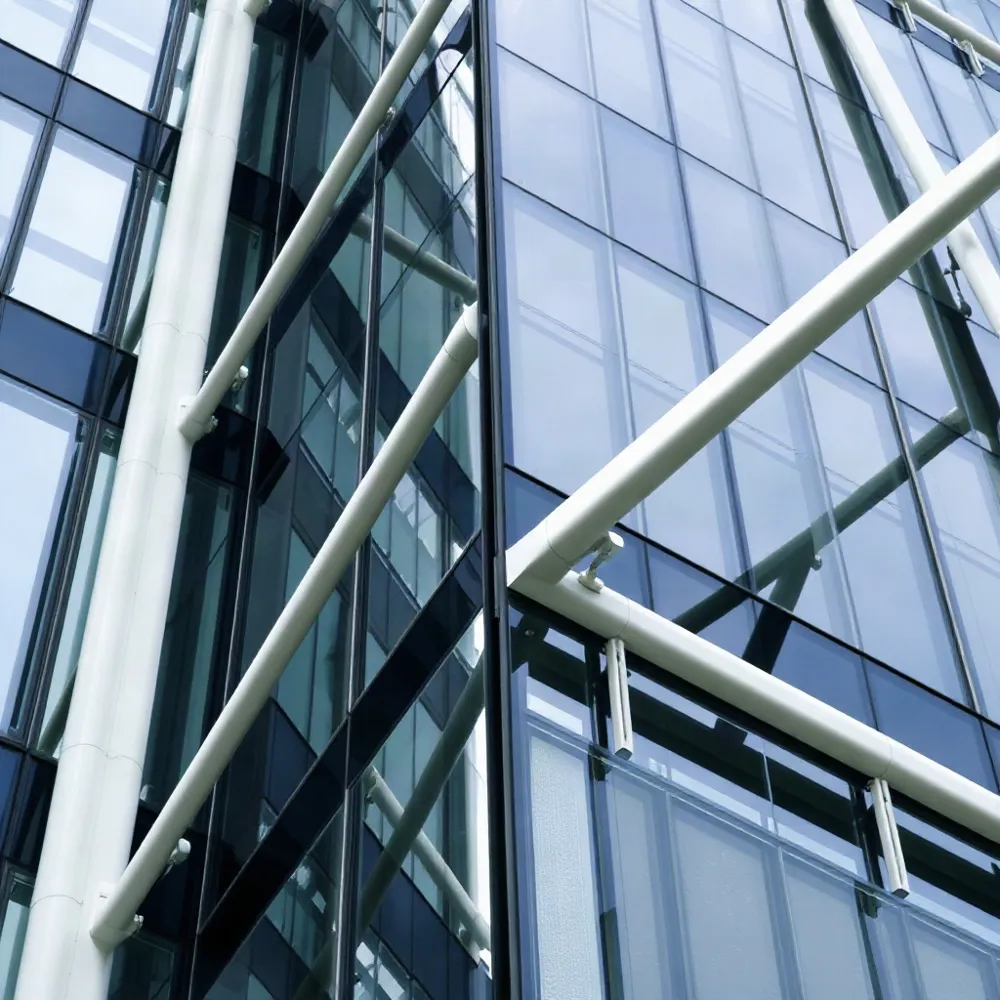
High-rise structures in the Middle East face extreme atmospheric demands, necessitating glass configurations engineered for severe environmental conditions. Architectural footprints and building proximity significantly amplify localized wind pressures. To manage these loads, engineers utilize heat-treated glass, such as fully tempered or heat-strengthened variants, which can improve mechanical resistance by up to five times compared to standard annealed glass.
Thermal stress introduces a secondary layer of complexity, particularly when desert temperatures reach 50°C. This cycle of intense heat and cooling often triggers condensation on the external surface of glass. To maintain structural integrity, the design of Insulating Glass Units must account for precise deflection and stress variables linked to installation height and the temperature delta between factory fabrication and site installation. Misalignment in these calculations often leads to premature seal failure.
For facility managers, mitigating these risks requires more than just high-spec glazing. Selecting facade access systems that are engineered to match the specific wind and thermal profiles of the site ensures consistent accessibility for ongoing performance monitoring and maintenance in the region’s harsh climate.
Access Systems: BMUs vs. Scaffolding
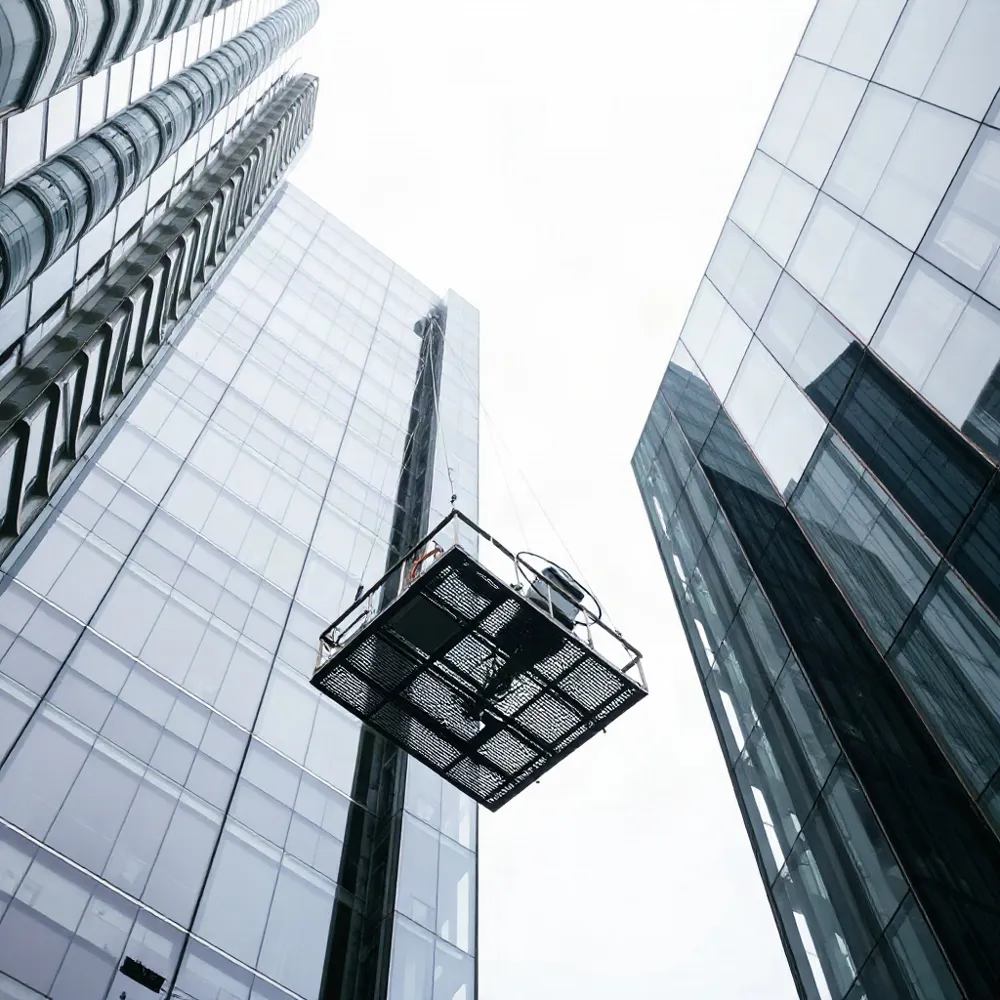
For engineers and facility owners, the choice between temporary access methods and integrated systems defines the long-term operational efficiency of a high-rise asset. Temporary scaffolding is increasingly impractical at great heights, where site constraints often prohibit the massive footprint required for assembly. Conversely, Building Maintenance Units provide a purpose-engineered, permanent access path that eliminates the recurring costs and potential surface damage associated with repeated scaffolding mobilization.
Permanent systems offer superior structural integration compared to traditional methods, providing a reliable platform for life-cycle maintenance. Modern BMU designs utilize advanced telescopic and articulated jibs with rotating bodies to navigate complex architectural geometries, setbacks, and building curves that scaffolding cannot effectively reach. These systems incorporate critical safety components, such as automated restraint systems to mitigate wind-induced swaying and sophisticated wire-rope monitoring, ensuring stable access even in the demanding climatic conditions of the Middle East. Unlike temporary structures that require lengthy installation cycles, BMUs offer rapid, on-demand operational readiness, which significantly minimizes facility downtime during essential glass replacement or cladding inspections.
The operational shift towards unitized curtain walls, which are factory-manufactured and crane-installed from the interior, further necessitates permanent access solutions. Sea Star Engineering distinguishes its approach by moving beyond standard models, designing custom equipment that accommodates specific facade profiles and weight loads. While competitors may offer off-the-shelf units that lack the precision for specialized glass replacement, our custom-engineered solutions allow for integrated winching and suction tools to manage heavy glazing panels securely. By prioritizing permanent access infrastructure during the design phase, owners ensure long-term compliance with regional safety standards while avoiding the logistical disruptions of secondary equipment rentals.
Specialised Cradles for Window Replacement in Occupied Buildings
Maintaining glass integrity in high-rise structures often requires complex window replacement procedures that traditionally demand significant interior access. To mitigate the operational disruptions common with temporary scaffolding, seastareng.com provides specialized cradles that shift the entire logistical burden to the exterior of the building. These purpose-built platforms feature integrated glass-handling manipulators, enabling engineers to extract and install glazing units with precision while ensuring the building remains fully operational for its occupants.
For buildings with complex geometries, such as those featuring recessed balconies or non-linear architectural elements, standard access equipment often fails to reach the required zones. seastareng.com engineers custom-profile cradles equipped with vacuum-assist arms and localized suction-cup mounting grids. These tools securely stabilize glass panels during replacement, preventing the dangerous risk of falling debris that is a significant safety hazard in dense urban areas. Unlike the invasive and slow setup of scaffolding, these rail- or davit-mounted systems offer a controlled, turnkey solution that adheres to the strict safety mandates required for work at height.
Integrating Waste Management into High-Rise Structures
Efficient waste handling in high-rise environments requires more than simple disposal points. Integrating waste management systems into high-rise commercial structures requires engineers to prioritize fire-rated gravity-fed chutes with integrated one-door-open safety interlocks to prevent cross-floor incidents and ensure strict fire compartmentalization.
System performance relies on precise vertical flow dynamics and calculated chute diameters to mitigate the risk of blockages. These systems are supported by automated cleaning cycles and high-efficiency odor control systems utilizing HEPA or carbon filtration. For modern high-rise projects, integrating advanced waste-management logic, such as segregated chute systems for recyclables and sensor-activated deodorization, is essential to meet sustainability standards and ensure operational hygiene.
The discharge zone must be engineered for seamless integration with high-capacity compactors, automated waste collection systems, or smart diverters to optimize logistics and minimize building maintenance labor. Finally, robust ventilation design is non-negotiable to maintain consistent negative air pressure within the shaft, effectively preventing the migration of foul odors and airborne contaminants into occupied commercial spaces. By implementing Sea Star Engineering solutions, property managers can ensure that internal waste logistics do not compromise the fire safety or air quality standards of the broader asset.
Maintaining Roof-Mounted Access Equipment in Arid Climates
The operational lifespan of a Building Maintenance Unit in the Middle East depends heavily on proactive maintenance routines that account for extreme temperatures and abrasive environmental conditions. While standard maintenance intervals may suffice in temperate regions, the localized presence of airborne grit and saline humidity in the UAE necessitates an accelerated, targeted strategy.
What are the critical maintenance protocols for ensuring the structural integrity of roof-mounted access equipment in extreme arid climates?
Maintenance protocols must prioritize a rigorous inspection schedule for high-stress components, particularly telescopic jib mechanisms and slewing drives susceptible to grit-induced wear. Technicians should conduct systematic non-destructive testing on load-bearing steel joints to identify micro-fractures caused by extreme diurnal thermal cycling and high-velocity wind loads. Due to the rapid degradation of protective finishes in the Middle East, maintaining the integrity of powder coatings and cathodic protection is essential to mitigate accelerated oxidation from salt-laden coastal air and humidity. Sea Star Engineering specializes in designing durable aluminum and steel solutions that withstand these environmental stressors, offering custom-engineered modifications that outperform generic off-the-shelf equipment in corrosive desert environments.
Lubrication schedules for wire ropes, sheaves, and mechanical gears must be strictly adhered to, utilizing specialized high-temperature, dust-repellent lubricants to prevent seizure and contamination. Finally, annual safety audits should include simulated stress testing of electro-mechanical restraint and emergency braking systems to verify that environmental exposure has not compromised critical fail-safe responses. This comprehensive approach ensures that assets remain compliant with local safety standards, preventing premature equipment failure and the subsequent operational downtime often experienced by facilities relying on less specialized maintenance approaches.
Cleaning Methods: From Manual to Robotic
Maintaining high-rise glass surfaces in the Middle East requires a strategic mix of traditional and modern methodologies. Manual cleaning currently serves as the industry standard, typically performed by technicians using rope access techniques certified by global bodies like IRATA or SPRAT. For lower-rise segments under 80 feet, water-fed pole systems using deionized water offer an efficient, detergent-free alternative that minimizes environmental impact in arid climates.
For complex building geometries, Sea Star Engineering provides custom-designed access solutions, including permanent cradles, which offer greater stability and safety compared to the rope-access systems favored by some general service providers. These permanent systems facilitate proactive, scheduled maintenance on a biannual or quarterly basis, preventing mineral deposits and urban pollutants from permanently etching the glass.
Technological advancements are now addressing the persistent labor challenges within the region. Robotic cleaning machines and drone-based inspection tools can decrease human exposure to high-risk environments while reducing overall cleaning time. Implementing these solutions, alongside professional facade cleaning protocols, helps protect the substantial asset investment in operational costs, while contributing to energy efficiency and property value.
The Economics and Safety Imperative
Regulatory frameworks in the UAE now demand rigorous oversight, with a 2023 government mandate requiring all commercial buildings to undergo facade inspections and cleaning at least once annually. For facility managers, these requirements serve as a baseline for risk management and asset preservation. While operational costs for these projects average around AED 500,000, professional upkeep is a proven driver of long-term value, as proper maintenance can increase a property’s market value by up to 5% and reduce cooling costs by up to 30% through improved solar reflection and thermal insulation.
The industry currently faces a critical labor shortage, with only 30% of the workforce trained in advanced techniques. This gap necessitates careful vetting of maintenance partners. Property owners should prioritize firms that offer verifiable safety certifications, such as IRATA or SPRAT, and maintain comprehensive high-altitude insurance.
Safety remains the primary operational constraint for high-altitude work. Mandatory protocols must include Site-Specific Risk Assessments, the implementation of two-rope systems, and clearly marked ground-level exclusion zones. Beyond these technical requirements, effective rental cradles and integrated access systems provide a safer, more reliable alternative to the inconsistent performance often found with temporary staging or labor-only contractors. Establishing clear contingency procedures further mitigates the potential for equipment failure or accidents during intensive cleaning cycles.
Planning for the Long Term
Effective high-rise asset management treats facade upkeep as a lifecycle engineering challenge rather than a series of isolated repairs. Maintenance strategies that combine cleaning with structural diagnostics ensure that minor issues like sealant fatigue are resolved before they compromise thermal efficiency or safety.
Early integration of permanent access solutions, such as a Building Maintenance Unit, is critical for long-term operational viability. Unlike retrofitted systems, purpose-built access equipment minimizes building downtime and reduces the risks associated with manual rope access. For facade modifications in occupied environments, utilizing Rental Cradles designed for precise, localized glass replacement helps avoid the logistical complications of heavy, exterior-mounted machinery.
Proactive maintenance, including the identification of features influencing glass façade damage, significantly lowers total ownership costs by preventing permanent etching and corrosion. Facility managers must conduct rigorous due diligence when selecting partners, prioritizing those with verifiable safety certifications and a demonstrated ability to navigate the complex environmental demands of high-rise glass façades.