Why Permanent Access Planning Matters for UAE Facility Managers
For facility managers in the UAE and GCC, the daily reality of a high-rise building involves navigating operational disruptions that arise from routine façade maintenance, window replacement, or emergency repairs. Temporary scaffolding, rope access, and mobile cranes introduce significant downtime — often turning a few days of planned work into weeks of blocked access, displaced tenants, and lost revenue. The problem is compounded in an economic region where a single cloud data center outage or a geopolitical incident can cascade through interconnected building systems and supply chains, as highlighted by recent AWS data center disruptions in the UAE.
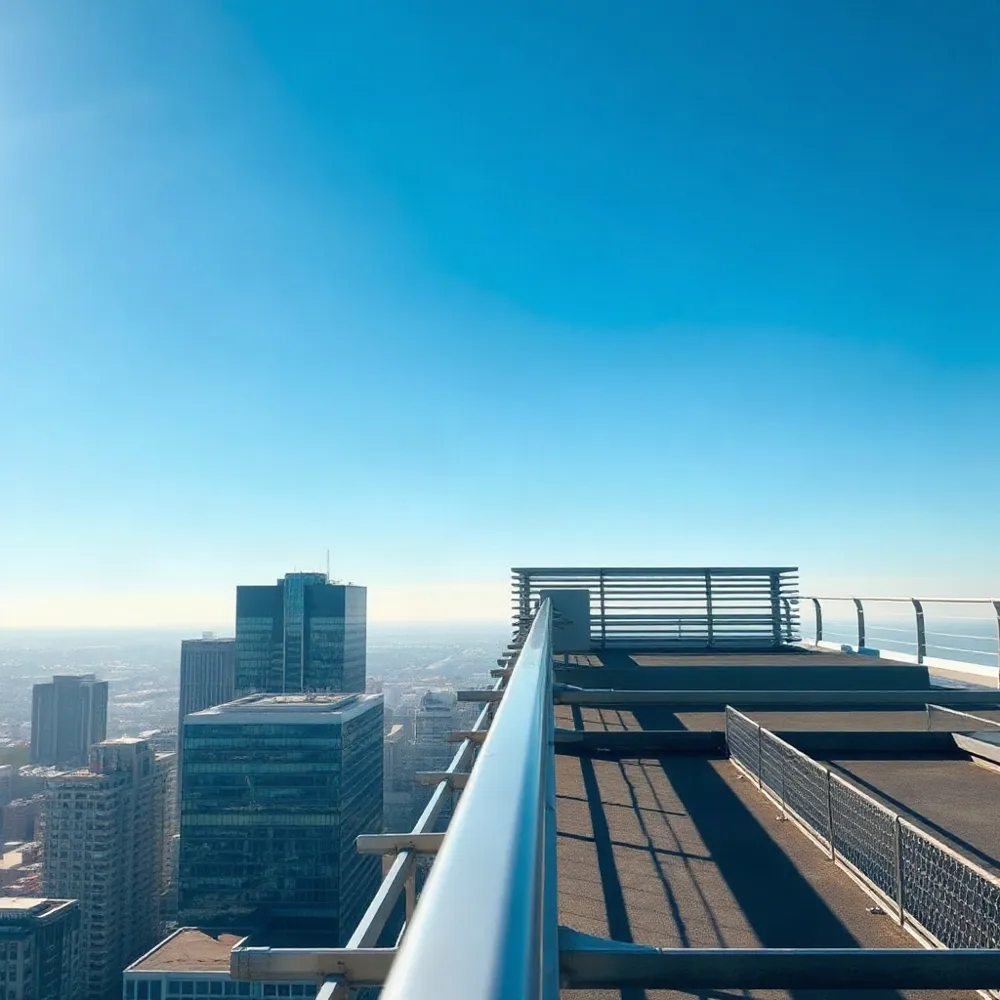
Permanent access equipment — such as Building Maintenance Units (BMUs), roof-mounted cradles, and fixed jib systems — is designed to eliminate these interruptions. Unlike rented scaffolding that must be assembled, inspected, and dismantled for each maintenance window, a permanently installed BMU is available on demand. Sea Star Engineering designs custom BMUs and purpose-made cradles that integrate directly into the building architecture, allowing trained staff to reach any point of the façade within minutes. This reduces man-hours per task, eliminates the risk of dropped tools or rigging failures during assembly, and keeps the building fully operational.
The strategic value of permanent access extends beyond cost savings. Regulators in Dubai and Abu Dhabi increasingly expect property owners to demonstrate operational resilience — the ability to maintain critical functions during disruptions. A permanent BMU is a physical asset that supports business continuity planning (BCP): it enables scheduled maintenance without shutting down floors, facilitates rapid response to glass breakage or cladding damage, and removes dependence on external crane availability during regional supply chain interruptions. By investing in permanent access systems, facility managers transition from a reactive, fire-fighting maintenance model to one that is predictable, auditable, and aligned with supervisory expectations for continuity testing and incident readiness.
This shift matters particularly in the UAE’s tall-building ecosystem. With the number of completed structures over 200 meters rising globally, and the GCC market for BMU equipment projected to grow alongside that trend, early integration of permanent access planning reduces the total cost of ownership across a building’s lifecycle. Rather than retrofitting after occupancy — often expensive and constrained by roof space — facility managers who specify BMUs during the design phase gain a safety-certified, insurance-friendly asset that protects both occupants and the building’s long-term market value.
What Is a Building Maintenance Unit and How Does It Work

A Building Maintenance Unit (BMU) is a permanently installed suspended access system that gives personnel safe, controlled movement along a building’s exterior. Unlike scaffolding or rope access, a BMU is engineered into the building’s structure—typically mounted on the roof or upper levels—and provides vertical, horizontal, and lateral positioning for tasks such as window cleaning, cladding inspection, and repair work.
The system’s core components include a roof-mounted carrier—rails, a rotating jib, or a telescopic boom—that supports a powered cradle or platform. A hoist or winch system raises and lowers the platform along redundant wire ropes, while counterweights or stabilizers maintain balance and prevent tipping during operation. Safety devices are integral to every BMU: anti-fall mechanisms, emergency stop buttons, load monitors, wind-speed sensors, and automatic brakes work together to protect workers and the building envelope.
For facility managers in the Middle East, the operational principle is straightforward: the carrier traverses the roof or parapet, positioning the cradle precisely at any point on the facade. The platform moves vertically via the hoist, and the jib or boom extends or rotates to reach recessed areas, curved surfaces, or irregular rooflines. This controlled mobility eliminates the risk and downtime of assembling and dismantling temporary scaffolding, allowing routine maintenance and emergency repairs to proceed while the building remains fully occupied.
Sea Star Engineering designs and installs BMUs tailored to the specific geometry and access requirements of each high-rise project, offering a range from simple manual cradles to fully powered units that handle complex facade layouts.
Compared to traditional methods, a permanent BMU reduces labor costs, cuts inspection and cleaning time, and improves worker safety—all without interrupting daily operations. This makes BMUs a preferred solution for owners and operators of tall buildings across the UAE and GCC, where stringent safety codes and glass-heavy architecture demand reliable, permanently installed access equipment.
Permanent BMU Versus Scaffolding: A Cost-Benefit Analysis
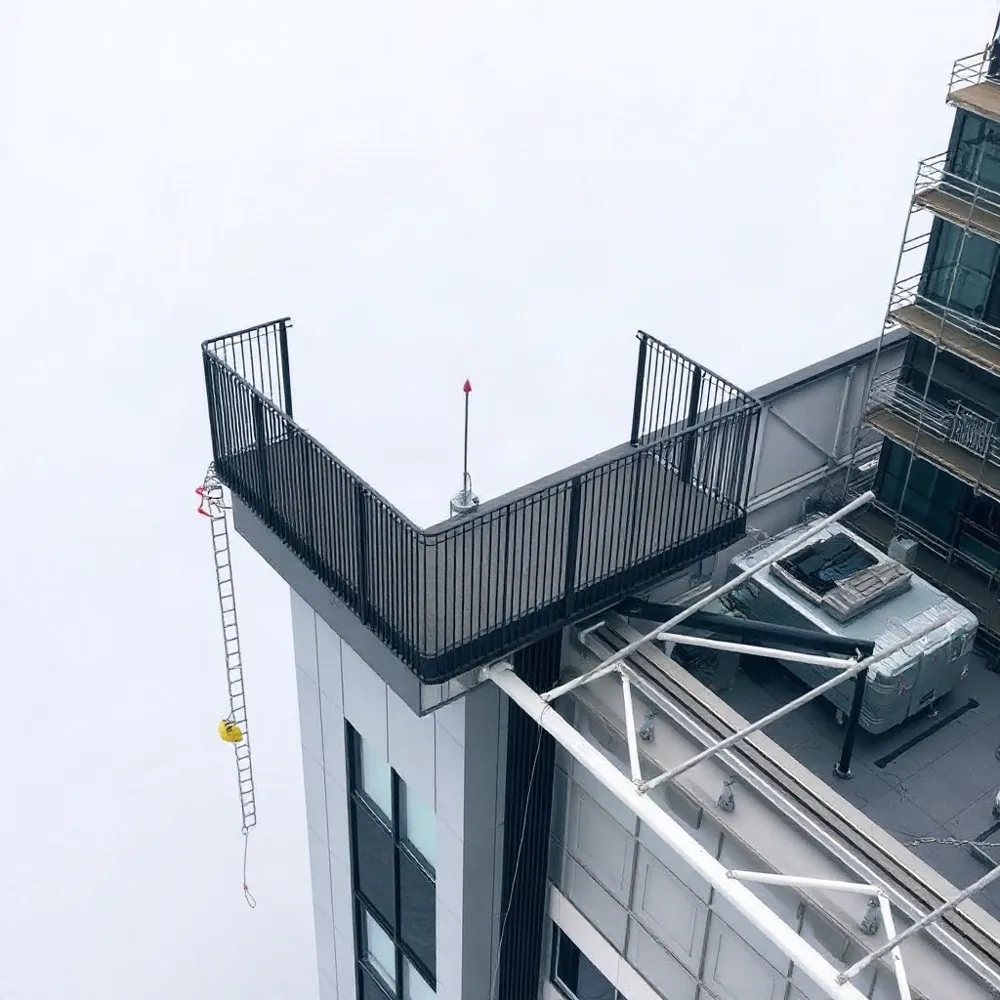
Choosing between a permanent Building Maintenance Unit (BMU) and scaffolding for façade access is a financial and operational decision with long-term implications. Scaffolding requires repeated erection, dismantling, and re-certification for each maintenance cycle, generating recurring labour and material costs. A permanent BMU is a one-time installation investment that provides immediate, repeatable access without those recurring setup delays or expenses.
The operational advantage of a permanent BMU becomes clear when considering downtime. Scaffolding installation on a high-rise can disrupt tenant activities and building operations for weeks. A roof-mounted BMU with a telescopic jib and traversing trolley can be deployed in minutes, allowing maintenance crews to access any section of the façade without moving barriers or blocking entrances. Sea Star Engineering designs and installs permanent access systems across the UAE that eliminate these recurring disruptions, providing facility managers with a turnkey solution that does not interfere with daily building use.
Safety is another decisive factor. Scaffolding is exposed to wind loads and can become unstable on complex facades. BMUs built to EN 1808 or ASME A120.1 standards incorporate redundant wire ropes, automatic brakes, wind-speed sensors, and emergency stop systems, providing a stable and compliant work platform even in the gusty conditions common across the Middle East. This engineering ensures that maintenance teams always work from a controlled, secure position.
Over the full lifecycle, savings extend beyond direct labour. Well-maintained facades improve building energy efficiency and reduce the risk of water ingress or cladding failure, which lowers insurance premiums and preserves asset value. A permanent BMU also shortens the time window of each maintenance operation, minimising tenant disruption and protecting rental income. For any organisation planning long-term building operations, the upfront capital cost of a BMU is offset by years of avoided scaffolding bills, reduced downtime, and safer working conditions.
Retrofitting BMUs Into Existing Buildings Without Major Structural Changes
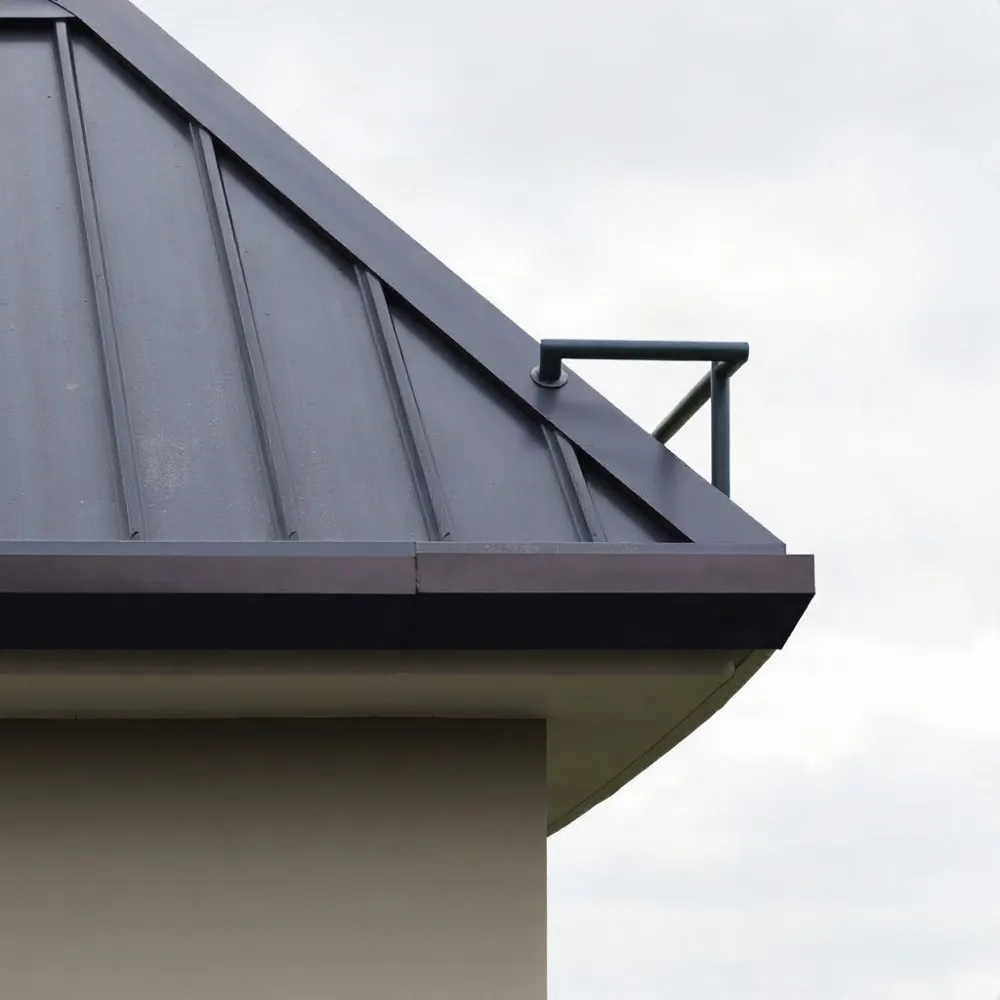
Retrofitting a Building Maintenance Unit (BMU) onto an existing building without major structural modifications is possible, but the feasibility depends on two factors: the roof’s load-bearing capacity and its geometry. A detailed structural assessment by a qualified engineer is required to verify whether the existing slab and support beams can handle the additional dead load of the BMU and the live loads from the cradle and its occupants.
When the assessment reveals marginal capacity, engineers can apply localized steel retrofitting techniques to reinforce the mounting points without altering the primary structure. Common methods include adding steel bracing, stiffeners, plate reinforcements, or custom support frames that distribute loads safely across existing columns. This avoids invasive structural changes and minimizes disruption to tenants—a critical concern for occupied 20- to 30-year-old towers in the Middle East.
The design approach favors lightweight modular BMUs and trackless systems, which reduce the imposed load and adapt to complex rooflines. Tailored counterweight arrangements keep the system stable without requiring permanent tie-ins to the main framework. Custom access equipment can be designed to integrate with existing building envelopes, enabling safe façade maintenance without invasive renovation and at a fraction of scaffolding’s operational impact.
UAE and Gulf Safety Standards and Certifications for BMUs
Compliance with safety standards is non-negotiable for permanent building access equipment in the UAE and Gulf regions. The primary regulatory document is the UAE Fire and Life Safety Code of Practice, which sets binding rules for the design, installation, and safe operation of Building Maintenance Units (BMUs). Any permanent system installed on a high-rise must demonstrate adherence to this code.
Internationally, two standards are widely referenced across the region. EN 1808 covers safety requirements for suspended access equipment, while ASME A120.1 sets the bar for the performance and safety of powered platforms and cradles. Local authorities typically require systems to meet these benchmarks. UAE Civil Defence approval is mandatory for most permanent access installations, confirming fire safety and structural integrity. In Dubai, the Dubai Municipality must sign off on the design; in Abu Dhabi, the Abu Dhabi Department of Municipalities and Transport (ADM) approval is required. These bodies verify that the equipment meets local codes and municipal project acceptance criteria.
Sea Star Engineering designs its BMU systems from the ground up to meet these combined local and international requirements. The company’s approach includes producing verified documentation packages for every installation: inspection logs, load test certificates, evidence of annual third-party audits, and the compliance paperwork needed for each emirate’s approval process. For facility managers and contractors, receiving a fully certified system from a single provider eliminates the coordination risk of sourcing compliance documents from multiple parties.
Custom Cradles for Window Replacement in Occupied Buildings
Replacing windows in an occupied high-rise without disrupting tenants or operations requires a different approach than traditional scaffolding. Sea Star Engineering addresses this challenge with purpose-made cradles designed specifically for window replacement in active buildings.
Design and Engineering Approach
The process begins with a thorough site assessment that evaluates the building’s structural constraints and each tenant’s operational requirements. The engineering team then develops a tailored suspension system, typically using lightweight aluminium platforms and adjustable restraint mechanisms. These cradles are designed to manoeuvre around occupied floors using counterweighted or roof-mounted davit arms that minimize vibration and noise.
Safety and Compliance Features
Integrated safety features include overload sensors, anti-sway stabilizers, and overhead protection to prevent debris from falling onto occupied areas. Every system meets UAE safety standards and international norms such as EN 1808, ensuring full compliance without compromising performance.
The end result is a permanent access solution that eliminates the need for external scaffolding, reduces window replacement downtime significantly, and keeps the building fully operational throughout the process.
Lifecycle Management and Scheduled Maintenance of BMU Systems
A permanent Building Maintenance Unit (BMU) represents a significant capital investment with an expected service life of 20 to 30 years. That lifespan is not automatic — it depends on a disciplined, schedule-driven maintenance program. For facility managers and engineers in the UAE and GCC, a maintenance plan that covers daily, weekly, quarterly, and annual tasks is the difference between a reliable access system and an expensive liability.
Routine Checks and Preventive Maintenance
Daily operator checks form the first line of defence. Before any shift, operators visually inspect wire ropes for fraying, confirm limit switches function, and test emergency-stop mechanisms. Weekly maintenance focuses on lubricating moving parts — trolley bearings, slewing rings, and winch components — alongside a functional verification of the brake system.
A more thorough quarterly inspection targets structural bolts for torque loss, examines electrical connections for corrosion, and checks drive components (motors, gearboxes) for wear or leaks. These intervals reduce the risk of mid-operation failure that can halt façade access for days.
Annual Deep Service and Compliance
Once per year, a deep service is required. This includes a full load test of the cradle and hoist system to confirm rated capacity, a formal assessment of wire-rope replacement intervals, and calibration of every safety device — overspeed governors, slack-rope switches, and load sensors. Sea Star Engineering recommends structuring this annual event to coincide with building insurance audits and local regulatory inspections, ensuring the BMU remains compliant with UAE and Gulf safety codes.
A formal preventive maintenance contract is the most effective way to enforce this schedule. In the UAE and GCC, where building occupancy can fluctuate rapidly, a contracted maintenance program guarantees that trained technicians perform every inspection on time, replacements are sourced from OEM suppliers, and all service records stay current for civil defence and labour authority reviews. Property owners who forgo a contract often find themselves scrambling for emergency repairs during tight window-cleaning or façade-repair windows, incurring higher costs and longer downtime.
| Interval | Tasks | Typical Outcome |
|---|---|---|
| Daily | Visual inspection of wire ropes, limit switches, emergency stops | Immediate identification of visible wear or damage |
| Weekly | Lubrication of moving parts; brake-function verification | Reduced friction wear and reliable stopping performance |
| Quarterly | Check structural bolts, electrical connections, drive components | Catch developing issues before they cause failure |
| Annual | Load testing, rope replacement assessment, safety-device calibration | Full compliance certification and extended system lifespan |
Integrating Permanent Access Into a Broader Operational Resilience Strategy
Business continuity planning (BCP) in the UAE increasingly requires organisations to look beyond IT systems and consider resilience in physical infrastructure. Regulatory authorities in the DIFC and ADGM expect firms to maintain continuity plans that cover disruptions to building access, façade maintenance, and the physical workspace itself, not just technology failures.
Permanent access equipment such as Building Maintenance Units (BMUs) directly supports this mandate by eliminating dependence on third‑party scaffolding rentals. When a geopolitical event, pandemic, or supply chain bottleneck makes temporary equipment unavailable, a permanently installed BMU provides guaranteed access for façade inspections, repairs, and emergency interventions without relying on external availability.
The operational logic mirrors that of resilient IT architecture. Just as a cloud platform uses redundancy, failover, and backup systems to maintain 99.99% availability, a permanent BMU acts as a dedicated access channel that reduces supply chain risk and prevents single‑point‑of‑failure scenarios. Facility managers can schedule critical maintenance independently of rental market conditions, contractor availability, or logistical delays.
Custom‑engineered BMUs, cradles, and waste‑management systems help building owners ensure that façade access remains a dependable, always‑available asset in any disruption scenario, directly strengthening their broader BCP framework.
Minimising Disruption Through Phased Planning and Communication
In occupied high-rise buildings, façade maintenance or window replacement can cause significant operational disruption if not carefully managed. The most effective way to minimise this impact is to break the work into controlled phases, each with clear access rules, working hours, and communication protocols. A well-defined scope that states exactly what is being repaired, what is excluded, and the required finish helps prevent the delays that often arise from incomplete planning.
Physical separation of the work area is essential in an occupied environment. A standard approach establishes three zones: the work zone itself, a buffer zone surrounding it, and public routes that remain open and clearly marked. Stable barriers, directional signage, floor and furniture protection, dust extraction, and daily housekeeping are all necessary to maintain safety and normal traffic flow. Scheduling noisy activities during off-hours, such as early mornings or evenings, further reduces the visibility of the work to daily operations.
A simple communication plan should identify who issues notices to building occupants, who approves any changes to the schedule, who coordinates access for contractors, and who receives daily progress updates. Many disruptions are caused by information gaps rather than by the repair work itself, so clear, consistent messaging keeps all parties aligned.
Close-out is as important as the planning phase. The work is not finished when tools leave the site. Inspection against the agreed scope, testing of affected services, removal of temporary controls, and formal confirmation that the area may return to normal use must all be completed before the project is signed off. A reliable record of repairs, materials used, tests performed, and any future actions required provides a clear asset history and supports compliance with local safety standards.
This phased, documented approach is used when installing permanent access solutions such as Building Maintenance Units (BMUs) and custom cradles in occupied buildings. By coordinating installation phases with building operations and maintaining clear communication with facility teams, daily activity continues with minimal interruption while permanent access infrastructure is put in place.
Market Trends and Innovations in BMU Technology
The global Building Maintenance Unit (BMU) market was valued at USD 3.44 billion in 2025 and is projected to reach USD 5.14 billion by 2030, growing at a compound annual rate of 8.3%. This growth is driven by a boom in high-rise construction, stricter worker safety codes, and the shift toward glass-centric architecture, which makes permanent access systems indispensable for asset owners.
Several technological trends are reshaping how BMUs operate. Semi-autonomous controls and IoT-enabled predictive maintenance allow facility managers to monitor equipment health remotely and schedule servicing before failures occur. In late 2024, the Alimak Group entered an exclusive partnership with Skyline Robotics to integrate the Ozmo robotic window-cleaning system with Alimak’s vertical access platforms, bringing AI-powered automation to facade maintenance.
Green innovation is also gaining traction. Manufacturers are adopting lightweight alloys, recyclable cradle materials, and low-power motors to reduce energy consumption and environmental impact. At the same time, modular and trackless BMU designs are making it easier to retrofit older buildings that have limited rooftop space or complex roof geometries, a challenge Sea Star Engineering addresses with its custom-design approach on each project.
In the Middle East and Africa, sustained investment in landmark towers is driving demand for advanced access equipment. As regional building codes tighten and developers seek to differentiate their properties, permanent BMU systems are becoming a standard specification rather than an optional add-on.
Selecting a BMU Provider: Best Practices and Red Flags
Choosing the right provider for a Building Maintenance Unit (BMU) is a long-term decision that affects safety, operational uptime, and total cost of ownership over two to three decades. Facility managers in the UAE and GCC should evaluate potential partners against concrete criteria rather than relying on generic capability statements.
Evaluating Customization and Local Expertise
Every high-rise building presents a unique combination of roof geometry, facade complexity, and local code requirements. A provider must demonstrate the ability to tailor solutions rather than offering off-the-shelf products. Sea Star Engineering, for example, develops purpose-made cradles and custom BMU configurations for each building’s specific constraints, a capability that becomes essential when retrofitting older structures or servicing distinctive architectural facades common in the region.
Reviewing Service Agreements and Certifications
The service and maintenance agreement should specify the use of original equipment manufacturer (OEM) spare parts, annual inspection schedules, and a local support team. Confirm that the provider holds current certifications against international standards such as EN 1808 and ASME, and meets local regulatory requirements from UAE Civil Defence and Dubai Municipality. Providers offering vague service commitments, limited local presence, or no documented training program are red flags.
Asking for Case Studies and References
Request case studies and references from completed high-rise projects similar in scale and type to your own. A reliable provider should be able to show documented outcomes, including project timelines, compliance verification, and post-installation performance data. Inquire about warranty terms and the provider’s plan for mid-life upgrades, as building maintenance needs and safety standards evolve over a BMU’s service life.
Permanent Access as a Cornerstone of Building Operations
Permanent Building Maintenance Units (BMUs) and custom cradles are more than access equipment—they are a strategic investment that directly reduces operational disruption, enhances worker safety, and aligns with UAE and GCC regulatory expectations. Transitioning from reactive, temporary scaffolding to a permanent access strategy transforms how property owners manage façade maintenance, window replacement, and emergency access across the building’s lifecycle.
For facility managers and engineers in the Middle East and Africa, the choice is no longer between cost and safety. A proactive approach eliminates the delays and hazards of rented scaffolding, cuts long-term expenditure on repeated manual setups, and ensures compliance with evolving regional safety codes. This shift supports broader operational resilience by removing a common source of unplanned downtime and supply chain dependency.
Sea Star Engineering provides tailored consultation, design, installation, and lifecycle support for permanent access systems across the UAE, GCC, and parts of Africa. With over two decades of local engineering experience, the company helps building owners future-proof their assets with purpose-made cradles, BMUs, waste chutes, and integrated steel and aluminium solutions that meet site-specific structural and aesthetic demands.