Why Material Durability Matters in the Middle East
The UAE’s climate presents one of the most demanding environments for building materials anywhere in the world. Summer temperatures regularly exceed 45 °C, relative humidity along the coast can surpass 90%, airborne sand and dust are nearly constant, and UV index values are extreme year-round. These conditions accelerate corrosion, fading, and structural degradation in unprotected metal components.
Architectural and industrial specifiers in the region must choose coating systems that resist all four stressors simultaneously. Traditional liquid paints often chalk, crack, or peel within a few years under such loads, leading to costly rework. Powder coating offers an alternative: a solvent-free, dry application that cures into a thick, uniform layer with high resistance to impact, moisture, UV radiation, and chemical attack.
This article examines the engineering principles behind powder coating’s toughness, the specific quality standards that govern its use in UAE projects, and real-world applications from building facades to waste chute systems. For facility managers and construction engineers, understanding these details is essential for specifying finishes that extend service life, reduce maintenance intervals, and protect capital investments.
Key Mechanisms Behind Powder Coating’s Toughness
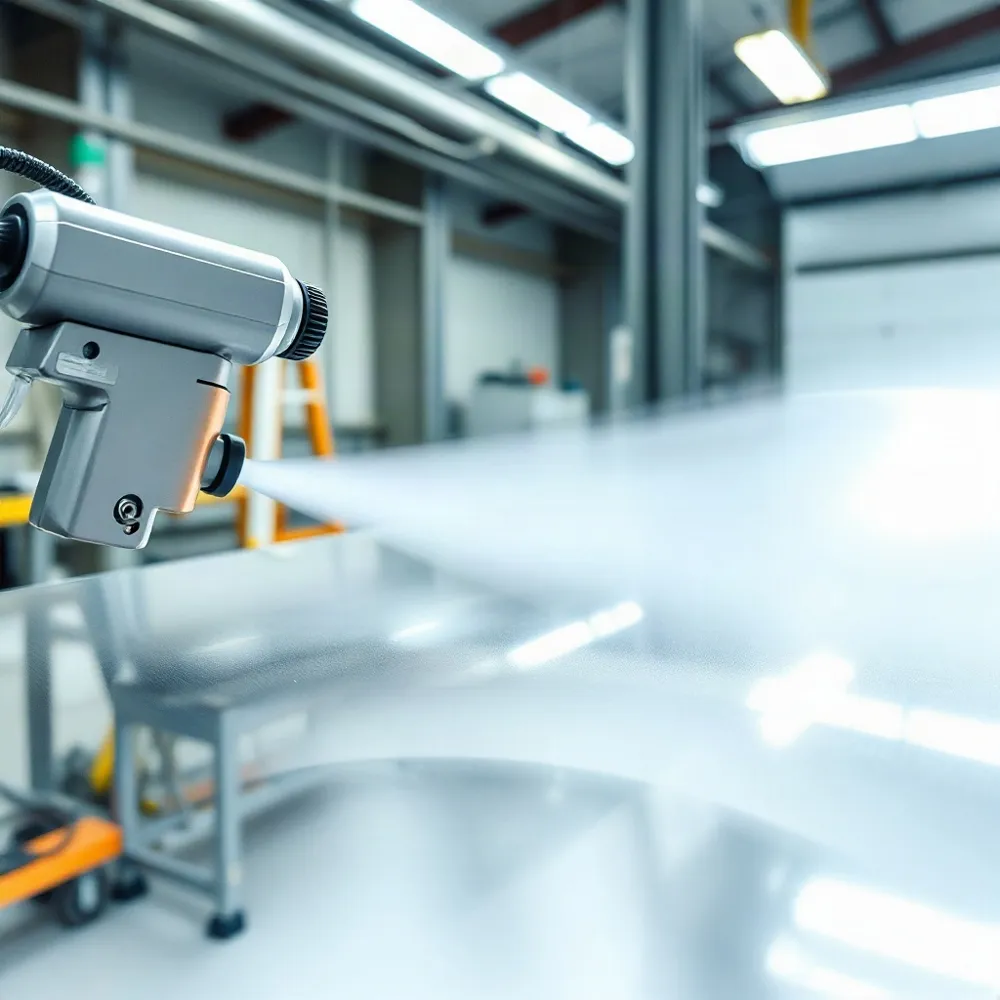
Powder coating achieves its strength through a dry application process. A free-flowing powder is electrostatically charged and sprayed onto a grounded metal surface, creating a strong initial attraction as described by powder coating technology. The part then enters a curing oven where the powder melts and crosslinks, forming a continuous, durable film.
The result differs sharply from liquid paint. Liquid coatings rely on evaporating solvents and can peel or chip under stress. Powder coating forms a thick, seamless layer that resists scratching, flaking, and corrosion. Because it contains no liquid carrier, it can be applied at film thicknesses between 60 and 120 microns without running or sagging.
Typical cure temperatures range from 180°C to 200°C for thermoset powders. The powder particles, sized between 2 and 50 micrometers, melt and fuse into a uniform finish. This bond is molecular, not merely adhesive, giving the coating its resilience against impact, moisture, and UV rays in demanding Middle Eastern climates.
Sea Star Engineering applies this precise process to its building access equipment and aluminium structures. Their powder coating service delivers the same controlled film build and environmental compliance that construction engineers expect for projects across the UAE.
Engineered Resistance to Sand, Salt, and Sun
Standard polyester powder coats are well-suited for many outdoor applications, but the UAE’s combination of intense UV radiation, high humidity, and airborne sand demands higher-performance formulations. Super-durable polyester and PVDF (polyvinylidene fluoride) resin systems are specifically designed for these conditions. PVDF powder coatings, sold under brand names such as Kynar 500 and Hylar 5000, offer the highest level of UV and corrosion resistance.
Service life data for powder coatings in UAE outdoor environments are well-documented. Standard polyester typically delivers 8–12 years of reliable performance. Super-durable polyester extends that range to 12–15 years, while PVDF coatings can maintain colour and gloss for 15–20 years or more. The higher upfront cost of PVDF — 30–50% more than polyester — is often justified for landmark projects and high-rise facades where recoating access is difficult and expensive. For coastal and offshore structures, marine-grade powder coating with advanced chromate or chrome-free pretreatment provides the necessary salt‑spray resistance.
These chemistries are routinely specified for high-rise curtain walls, building facades, and aluminium window frames across the UAE. Sea Star Engineering applies these engineered coating systems to its permanent building access equipment, ensuring that cradle systems, BMUs, and waste chutes withstand the local climate without premature degradation.
Surface Preparation: The Foundation of Longevity
The long-term performance of any powder-coated asset depends almost entirely on what happens before the powder touches the metal. In the UAE’s coastal and desert conditions, inadequate preparation is the most common root cause of premature coating failure, including blistering, peeling, and under-creep corrosion.
Preparation Steps for Steel and Aluminium
For steel, abrasive blasting to an Sa 2.5 profile (near-white metal) creates the mechanical anchor needed for strong adhesion, significantly outperforming chemical cleaning alone. Aluminium requires a conversion coating, either traditional chromate or modern chrome-free alternatives based on titanium or zirconium, to create a corrosion-resistant chemical bond that prevents creep at edges and defects. Degreasing and removal of mill scale, oxides, and welding residues precede both steps.
The Cost of Poor Preparation
When surface contaminants or inadequate profiles remain, moisture and salt-laden air penetrate beneath the coating. The result is blistering, corrosion spreading from cut edges, and eventual delamination—all of which can require complete stripping and recoating, often within years instead of the expected 10–15 year service life of a quality powder coat.
In-House Capabilities in the UAE
Leading UAE applicators invest in dedicated pretreatment infrastructure to ensure consistent adhesion. Facilities like Sea Star Engineering incorporate sandblasting equipment and chemical treatment lines as part of their powder coating service, verifying that steel and aluminium components are properly prepared before coating. For building maintenance units and access equipment, which are subject to cyclic loads and constant exposure to saline air, this level of process control is critical to long-term reliability and safety.
Quality Standards and Certifications in the UAE
Construction engineers and facility managers in the UAE should look for certifications that validate a powder coater’s process discipline and the coating’s long-term performance. The most recognized benchmarks for architectural aluminium are QUALICOAT, GSB, and the AAMA standards.
QUALICOAT and GSB certifications mandate rigorous process audits, including salt spray testing, accelerated weathering, and adhesion checks. These ensure that the powder coating system has been formulated and applied to withstand the UAE’s harsh environment. For coastal developments near Dubai Marina or Abu Dhabi Corniche, the Qualicoat Seaside designation confirms the coating has been specifically tested for high salinity and corrosion resistance.
AAMA Warranty Tiers
The AAMA (American Architectural Manufacturers Association) standards provide a clear three-tier warranty structure that specifiers can use to match coating performance to project requirements.
| Standard | Coating Type | Typical Warranty |
|---|---|---|
| AAMA 2603 | Standard polyester | 5-year warranty |
| AAMA 2604 | Super-durable polyester | 10-year warranty |
| AAMA 2605 | PVDF (Kynar / Hylar) | 20-year warranty |
AAMA 2604 and 2605 coatings are the most commonly specified for high-rise facades and premium architectural metalwork in the UAE, where long-term colour and gloss retention under intense UV radiation is critical.
ISO Management System Certifications
Beyond coating-specific standards, a reliable applicator should hold ISO certifications that demonstrate quality control and operational discipline. ISO 9001:2015 (quality management), ISO 14001:2015 (environmental management), and ISO 45001:2018 (occupational health and safety) indicate that the facility follows audited processes for surface preparation, application, and curing.
Applications: From Facades to Furniture
Powder coating is the preferred metal finish for a wide range of building and structural elements across the UAE. Its combination of durability, colour consistency, and environmental compliance makes it suitable for both exposed outdoor components and indoor industrial items.
Architectural Aluminium
For exterior building envelopes, architects specify powder coating on aluminium curtain walls, cladding panels, window frames, doors, louvres, and balustrades. A quality polyester powder coat on aluminium in UAE outdoor conditions can provide a service life of 8–12 years, while super-durable or PVDF formulations extend that to 15–20 years. Many UAE applicators offer over 600 RAL colours and special effects—wood-grain, antique bronze, metallic, and textured finishes—allowing designers to match aesthetic intent without compromising protection.
Industrial and Infrastructure Applications
Beyond architecture, powder coating protects structural steel in warehouses, machinery components, electrical enclosures, and storage racking. For these uses, epoxy or hybrid thermosets provide impact and chemical resistance. Infrastructure items—street furniture, signage, lighting poles, and fencing systems—also rely on powder coating to withstand UV, sand abrasion, and thermal cycling with minimal maintenance.
Connection to Permanent Access Systems
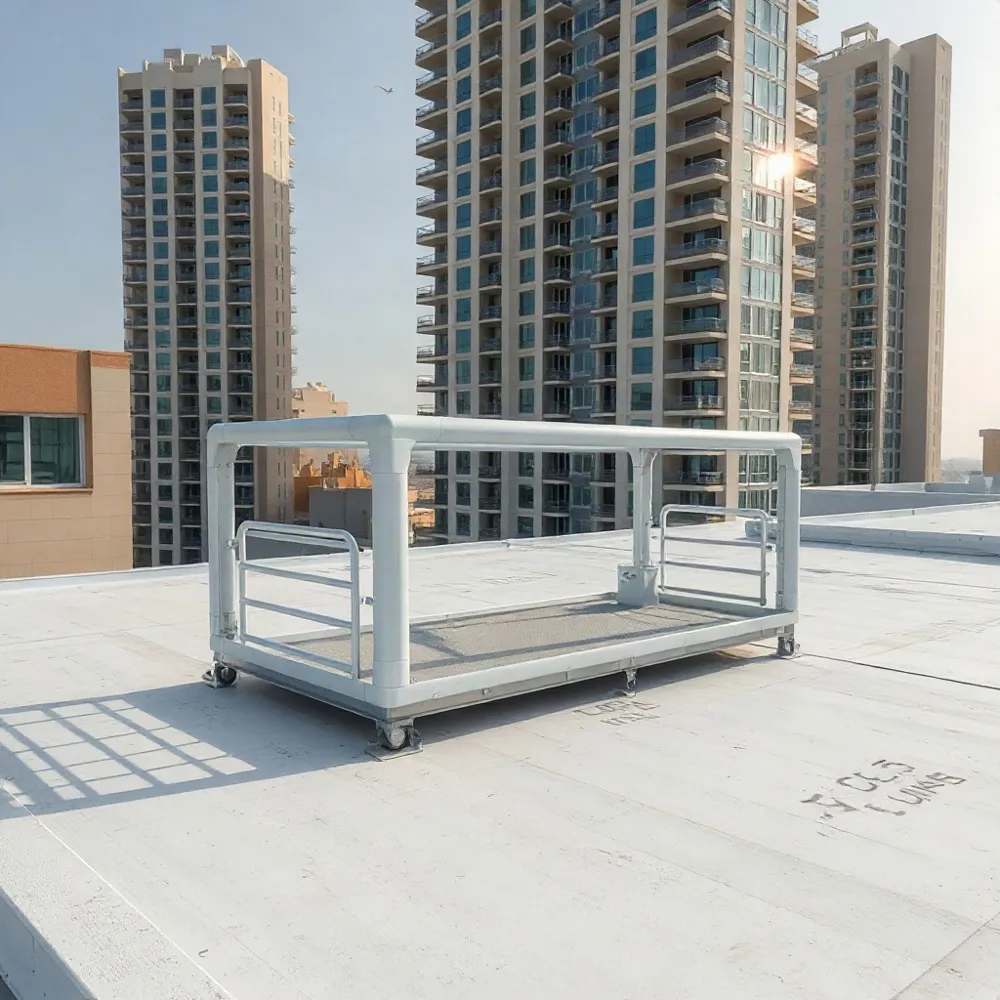
Building Maintenance Unit (BMU) cradles, roof-mounted tracks, and other permanent access equipment require finishes that are both durable and visually complementary to the facade they service. Sea Star Engineering applies powder coating to aluminium and steel access components, ensuring they resist chipping, corrosion, and wear while matching the building’s specified colour and gloss. This integration means the access system remains functional and attractive for the full service life of the structure.
| Application Category | Typical Items | Coating Type & Service Life |
|---|---|---|
| Architectural aluminium | Curtain walls, windows, doors, louvres, balustrades | Polyester or PVDF; 8–20 years depending on grade |
| Industrial | Structural steel, machinery, electrical enclosures, storage racks | Epoxy/hybrid; 8–15 years indoor |
| Infrastructure | Street furniture, signage, lighting poles, fencing | Polyester; 8–12 years outdoor |
| Permanent access equipment | BMU cradles, roof tracks, aluminium components | Custom-matched polyester; 8–15 years outdoor |
Selecting the Right Coating for the Environment
Choosing the wrong powder coating for a given environment can lead to early failure, costly rework, and unsafe access equipment. Engineers and facility managers in the UAE must match the coating chemistry and system design to the specific exposure conditions the asset will face.
Coating Chemistries and Their Applications
Epoxy powder coatings offer excellent chemical and corrosion resistance but chalk rapidly when exposed to ultraviolet light. They are unsuitable for any outdoor use in the UAE and should be limited to indoor industrial applications such as electrical enclosures and warehouse shelving.
Standard polyester powder coats are the most widely used chemistry for outdoor architectural and structural applications. In the UAE, a standard polyester typically provides 8–12 years of service life before noticeable gloss loss or chalking occurs. For more demanding conditions, super-durable polyester formulations extend that lifespan to 12–15 years and meet AAMA 2604 criteria with a 10-year warranty.
PVDF powder coatings (sold under brand names such as Kynar 500 and Hylar 5000) deliver the highest performance for outdoor architectural applications. They retain color and gloss for 15–20+ years under direct UAE sun and are frequently mandated for high-rise curtain walls and government building projects. The cost premium is 40–60% over standard polyester.
Two-Coat and Marine-Grade Systems
For high-corrosion environments—coastal structures, offshore equipment, and building access machinery near the Arabian Gulf—a two-coat system of epoxy primer followed by a polyester or PVDF topcoat is the usual specification. The primer provides a barrier against moisture and salts, while the topcoat delivers UV resistance and color retention.
Marine-grade powder coating systems incorporate advanced pretreatment and protective layers engineered specifically for saline air and high humidity. Facilities holding QUALICOAT Seaside or GSB certification have validated processes for these demanding conditions.
Recommendations for Access Equipment
For Building Maintenance Units (BMUs), roof cradles, and permanent access equipment installed on high-rise buildings near the coast, the recommended specification is either a super-durable polyester (AAMA 2604, 10-year warranty) or a PVDF system (AAMA 2605, 15–20-year warranty). A two-coat system provides the best corrosion protection in saline air.
Verifying that the applicator holds appropriate certifications is as important as selecting the powder chemistry.
Waste Chute Systems: An Integrated Sustainability Solution
Waste chute systems provide a dedicated, gravity-fed route from each floor to a central collection point, eliminating manual hauling through service elevators and corridors. This design directly reduces labour costs and speeds up waste removal during construction and daily operations.
Powder-Coated Components: Engineered for Daily Abuse
The liners, doors, and hoppers inside a waste chute endure constant abrasion from debris, moisture from organic waste, and impact from dropped objects. Powder coating creates a thick, tough finish that resists chipping, corrosion, and wear far better than liquid paint. High-durability polyester powder coatings are applied to waste chute components, ensuring that chutes installed in high-traffic towers retain their structural integrity and cleanability for years, even in coastal developments where salt-laden air accelerates corrosion.
Enclosed Shafts Reducing Dust and Disruption
Enclosed within sealed shafts, modern chutes minimise dust, odour, and pest spread. The smooth, non-porous surface of a powder-coated liner repels grime and makes periodic cleaning straightforward, supporting hygiene compliance in busy residential and commercial towers.
Fire Safety and Cleanable Liners
Fire-rated materials and easy-clean liners are integral to safety compliance. Powder-coated steel or aluminium components can be specified with intumescent coatings or fire-resistant seals that meet UAE civil defence requirements. For high-rise developments, integrating a properly sized bin at the base ensures compatibility with municipal collection, preventing overflow and reducing long-term maintenance costs.
Choosing a Reliable Powder Coating Partner
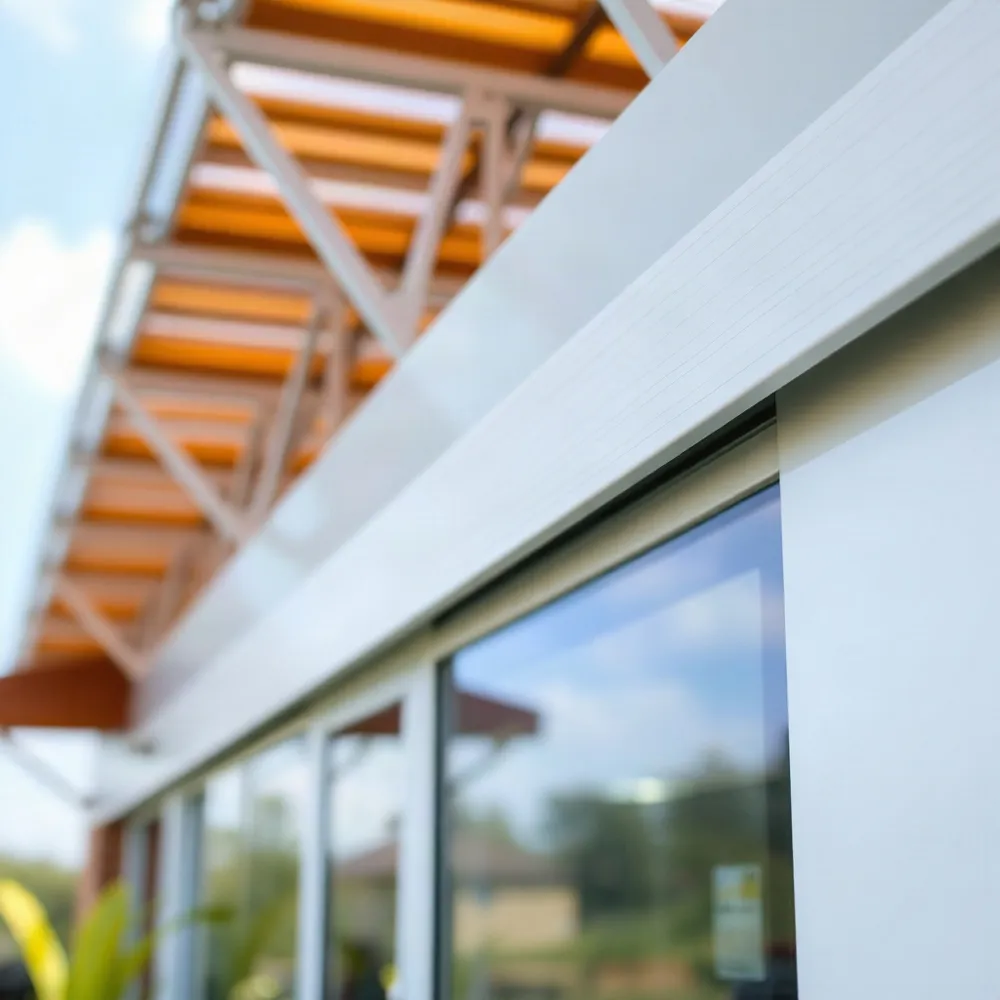
The durability of a powder-coated asset depends as much on the applicator’s process discipline as on the powder chemistry itself. Engineers and facility managers evaluating a powder coating service provider in the UAE should verify several concrete capabilities before awarding a contract.
Certifications and Process Control
A certified applicator status from global powder manufacturers such as Jotun or AkzoNobel signals that the coating applicator’s process meets the supplier’s stringent quality criteria. Adherence to international standards like Qualicoat (architectural aluminium), GSB, or the AAMA warranty tiers provides independent validation of the coating’s long-term performance. Certifications such as ISO 9001 (quality management), ISO 14001 (environmental management), and ISO 45001 (occupational health) further indicate a committed quality culture.
In-House Pretreatment and Equipment
Surface preparation is the single most important factor in coating longevity. Providers that offer in-house shot blasting (Sa 2.5 finish), chemical pretreatment (chromate or chrome-free conversion), and automated spray lines with accurate temperature control produce more consistent and defect-free finishes. Sea Star Engineering, for example, integrates powder coating within its fabrication workflow, ensuring that surface preparation and application are managed under one roof with documented quality checks.
Leading Providers in the UAE
Several companies in the UAE operate facilities that meet these benchmarks. Rainbow Powder Coating (est. 1986) offers Qualicoat-aligned processes, a daily capacity of 80 tons, and warranties up to 25 years. Skye Metal Coating holds ISO 9001, ISO 14001, and ISO 45001 certifications and works with brands like Jotun and Prismatic. Al Nawras Metal Coating (ANMC) in Dubai Investment Park 1 is a certified applicator of AkzoNobel and Jotun systems with a 7,000-ton annual capacity. ProCoat Steel Solutions, staffed by NACE-certified engineers, operates fully automated lines and carries ‘Approved Applicator’ status from both Interpon-Akzonobel and JOTUN. Khambati Metal Industries in Jebel Ali runs a fully automatic horizontal plant with laboratory QA.
Warranty, Support, and Long-Term Protection
A strong coating partner reduces operational downtime by delivering consistent results that resist failure mechanisms such as blistering, peeling, and corrosion undercut. Look for providers that offer 24/7 technical support, short turnaround times, and explicit warranties that align with the intended service life of the asset—whether it is a building facade targeted for 15-20 years or industrial equipment requiring heavy-duty protection.
Choosing a partner that combines certified quality control, in-house pretreatment, and automated production lines gives facility owners confidence that their investment will deliver the durability and low maintenance that the UAE’s demanding environment requires.
Investing in Durability through Informed Coating Choices
Powder coating is a cost-effective, long-term strategy for protecting metal assets in the UAE’s harsh climate. Proper surface preparation, selection of the appropriate chemistry (polyester for standard outdoor use, PVDF for maximum UV resistance), and engagement with certified applicators all contribute to a coating that can extend service life and reduce maintenance costs.
For facility managers and engineers specifying access equipment and structural elements, specifying quality powder coating is an investment in long-term performance. A partner like Sea Star Engineering combines certified process discipline with the engineering expertise needed to ensure that every powder-coated component delivers its full service life under the UAE sun.